









You’ve seen the brochures. Lush forests, smiling locals, a traveller doing yoga on a cliff at sunrise with the caption: “Travel that gives back.”
- What Is Regenerative Travel — Really?
- Why “Sustainable” Is No Longer Enough
- The Hallmarks of a Credible Regenerative Travel Operator
- How to Choose the Right Regenerative Travel Operator
- Operator Recommendations: Who Is Actually Doing It
- Operator Comparison Table
- Real-World Traveller Scenarios
- FAQ: Regenerative Travel Answered
- The Bottom Line: Travel That Heals
But does it? Really?
Regenerative travel is the most meaningful shift the adventure tourism industry has seen in decades — but it’s also one of the most abused terms in modern travel marketing. Greenwash is everywhere. Vague pledges about carbon offsets and plastic-free straws masquerade as deep ecological commitment. For travellers who genuinely want their journeys to do more good than harm, knowing how to tell the difference is everything.
This guide cuts through the noise. We’ll define what regenerative travel actually means (and what it doesn’t), explain how it differs from ecotourism and sustainable travel, and give you a vetted shortlist of operators who are doing it credibly — backed by real certifications, measurable outcomes, and community partnership models that hold up to scrutiny.
What Is Regenerative Travel — Really?
The term has roots in regenerative agriculture: the idea that farming shouldn’t just be sustainable (maintaining existing conditions) but actively restorative — rebuilding soil health, biodiversity, and ecosystems over time.
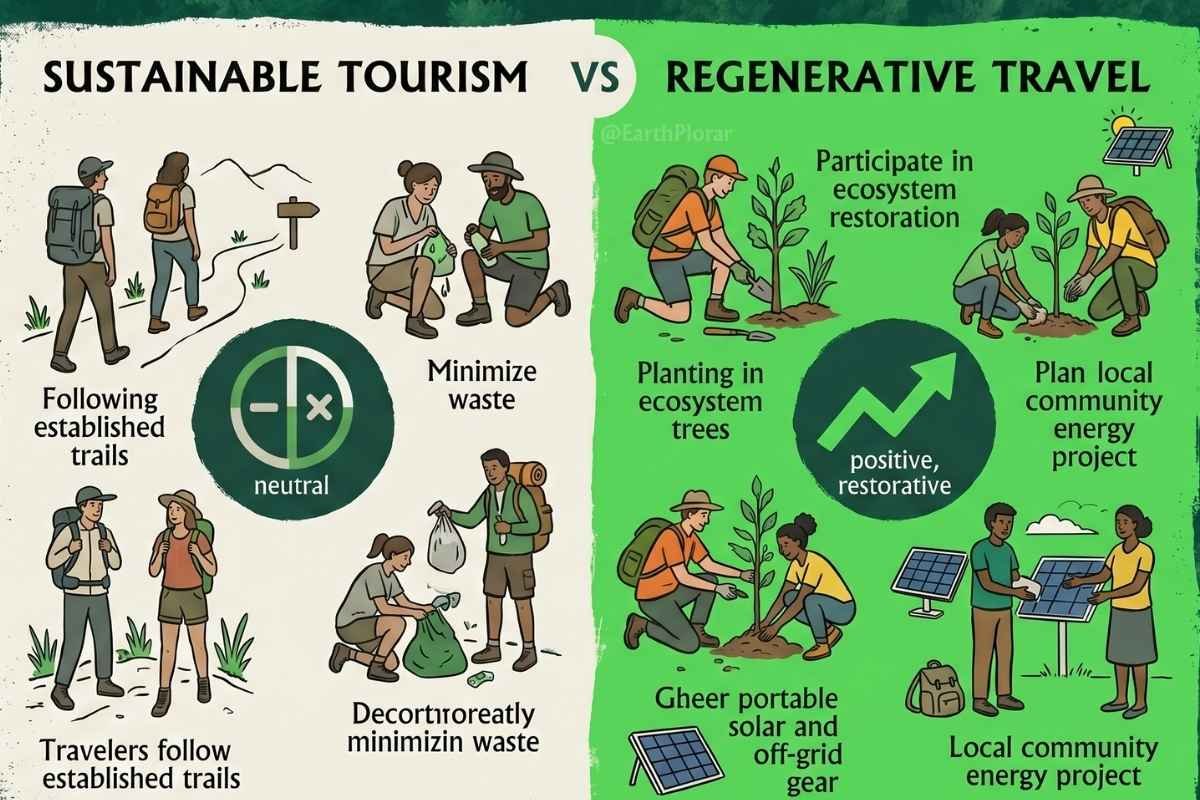
Applied to travel, regenerative tourism means a journey that leaves a destination meaningfully better than it was before you arrived. Not just carbon neutral. Not just “low impact.” Better.
This might include:
- Actively restoring degraded habitats during or after a visit
- Routing tourism revenue directly into local conservation projects
- Supporting indigenous land stewardship programs
- Rebuilding wildlife corridors through visitor access fees
- Co-creating community infrastructure that outlasts the tourist season
The core principle: Sustainable travel minimises damage. Regenerative travel creates net positive change.
How Regenerative Travel Differs from Ecotourism and Sustainable Tourism
These three terms are often used interchangeably. They shouldn’t be.
| Term | Core Goal | Typical Outcome |
|---|---|---|
| Ecotourism | Experience nature responsibly | Environmental awareness; low disturbance |
| Sustainable Tourism | Maintain current conditions | Reduced carbon footprint; resource efficiency |
| Regenerative Travel | Actively restore and improve | Ecosystem recovery; community empowerment; net positive environmental impact |
Ecotourism is about where you go. Sustainable tourism is about how you travel. Regenerative travel is about what you leave behind.
Why “Sustainable” Is No Longer Enough
Here’s the uncomfortable truth: in a world of accelerating biodiversity loss, rising sea levels, and collapsing coral ecosystems, “doing less harm” is no longer an adequate ambition.

The UN Environment Programme estimates that tourism accounts for approximately 8% of global carbon emissions when full supply chains are considered. Even the most conscientiously “sustainable” trip on a long-haul flight contributes meaningfully to that number.
Regenerative travel doesn’t pretend the carbon footprint isn’t real. Instead, it asks: given that I’m here, how do I make the destination, the ecosystem, and the community genuinely better off because I came?
That’s a fundamentally different question — and it leads to fundamentally different travel products.
The Hallmarks of a Credible Regenerative Travel Operator
1. Measurable Impact, Not Marketing Language
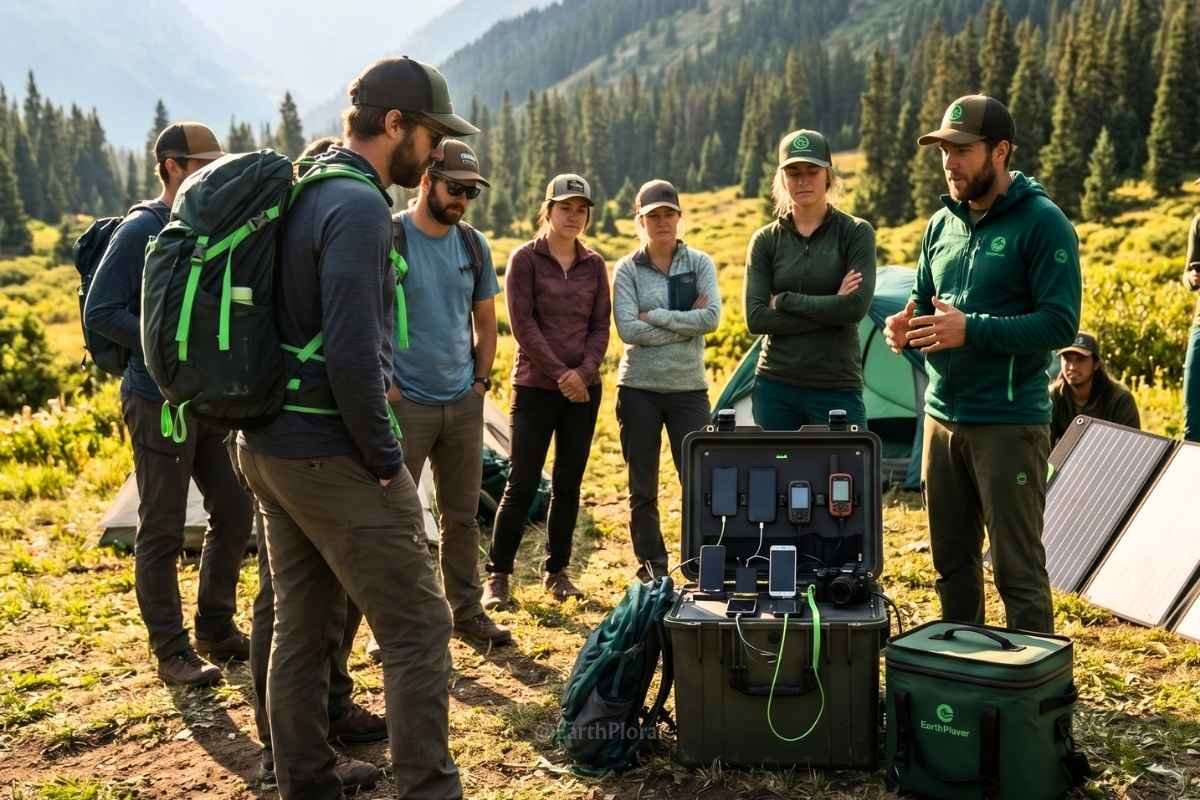
A credible operator publishes specific, third-party verified data. How many hectares of land restored? How many tonnes of carbon sequestered? What percentage of revenue reaches local communities? If the answer is “we’re committed to sustainability,” that’s not an answer.
2. Community Ownership or Genuine Partnership
Regenerative travel doesn’t happen to communities — it happens with them. Look for operators where local people have decision-making power, ownership stakes, or formal partnership agreements that extend beyond seasonal employment.
3. Recognised Third-Party Certifications
Certifications don’t guarantee everything, but they provide a floor of accountability. Look for:
- B Corp Certification — rigorous social and environmental performance standards
- Travelife Gold — internationally recognised sustainable tourism certification
- Global Sustainable Tourism Council (GSTC) accreditation
- Rainforest Alliance Certified — particularly relevant for Latin American operators
- Long Run Membership — conservation business alliance for wildlife and nature operators
4. Active Ecological Restoration Programming
This is the clearest differentiator. Is there a reforestation programme? A coral restoration dive? A wildlife monitoring project that guests contribute to? Genuine regeneration requires active intervention, not just passive non-harm.
5. Transparent Supply Chains
Where does the money go? Who owns the lodge? Who employs the guides? Transparent operators publish this clearly and aren’t defensive when asked.
How to Choose the Right Regenerative Travel Operator
Before booking, run every operator through this checklist:
Research Checklist:
- Can they show independently verified impact data (not just self-reported)?
- Do they hold at least one credible third-party certification?
- Is there meaningful community ownership or formal benefit-sharing?
- Does the itinerary include active restoration activities (not just visits to protected areas)?
- Do their guides include indigenous or local experts with named credentials?
- Is there a clear policy on carbon emissions and how they’re addressed beyond offsetting?
- Can they name specific partner communities and projects with publicly available information?
If an operator hesitates on more than two of these, look elsewhere.
Operator Recommendations: Who Is Actually Doing It
🌱 Budget–Mid Range: Accessible Regenerative Experiences
1. Intrepid Travel — Best for Solo Travellers Entering Regenerative Tourism
Overview: One of the most scrutinised sustainable operators in the world, Intrepid has evolved its model significantly toward regenerative principles. They measure impact through The Intrepid Foundation, their non-profit arm, and publish annual impact reports.
- B Corp Certified: Yes (recertified 2023)
- Key regenerative programmes: Community homestay models in Nepal, rewilding partnerships in Morocco, women-led itineraries across Southeast Asia
- Carbon approach: Measured, reduced, and offset through Climate Friendly; moving toward Scope 3 reduction targets
- Best for: First-time responsible travellers, solo adventurers, cultural immersion seekers
- Price range: £1,200–£3,500 depending on destination and duration
- Honest limitation: Scale means not every trip is equally regenerative; their flagship “Responsible Travel” itineraries are stronger than standard tours
- Certification: B Corp, Travelife Gold
2. Much Better Adventures — Best for Active Outdoors Lovers
Overview: UK-based operator focused on adventure travel with a strong community-first model. Founded specifically to challenge the greenwash model.
- Certified: B Corp
- Key regenerative programmes: Gorilla trekking in Rwanda with direct revenue to community conservation, skiing in Slovenia with local-only guiding teams
- Carbon approach: Carbon negative by design — all trips calculate and offset at 200% through Gold Standard projects
- Best for: Weekend adventurers, hikers, winter sports enthusiasts who care about trail ethics
- Price range: £500–£2,800
- Honest limitation: Smaller portfolio; destination range not as wide as larger operators
🌿 Mid–Premium Range: Deeper Impact, More Immersive
3. G Adventures — Best for Diverse Destinations with Verified Social Impact
Overview: G Adventures pioneered the “community tourism” model with their Planeterra Foundation — now one of the most verifiable community-benefit structures in the industry.
- B Corp Certified: Yes
- Key regenerative programmes: Planeterra partner network includes 50+ social enterprises worldwide; guests can visit, purchase from, and contribute to each
- Carbon approach: Published carbon reduction roadmap; offset partnership with South Pole
- Best for: Group travellers, families, adventurers who want structured but meaningful itineraries
- Price range: £1,500–£5,000
- Honest limitation: Group sizes can be larger than ideal for fragile ecosystems; choose “Local Living” or “National Geographic Expeditions” sub-brands for higher regenerative intent
- Certification: B Corp, Travelife
4. Journeys Within Our World — Best for Genuine Community Co-Creation
Overview: A boutique operator built explicitly around a “5% pledge” model — 5% of gross revenue directed to community conservation projects chosen jointly with destination communities. Small group sizes, deep community access.
- Key regenerative programmes: Women’s weaving cooperatives in Guatemala, freshwater conservation in Costa Rica, turtle monitoring in Belize
- Best for: Travellers who want genuine community relationships, not packaged “cultural experiences”
- Price range: £2,500–£7,000
- Honest limitation: Limited destination portfolio; premium pricing not accessible to all budgets
- Certification: Certified Sustainable Travel Alliance member
🌍 Premium: Full Regenerative Immersion
5. Natural Habitat Adventures — Best for Wildlife and Conservation-Led Expeditions
Overview: The official travel partner of the World Wildlife Fund, NatHab operates with a conservation-first philosophy that is genuinely integrated into every itinerary — not bolted on.
- Key regenerative programmes: Polar bear conservation in Churchill, coral reef monitoring in Belize, jaguar tracking in the Pantanal
- Carbon approach: Carbon-neutral certified since 2007 — one of the longest-standing commitments in the industry
- Best for: Wildlife photographers, conservation-minded travellers, luxury eco-adventures
- Price range: £5,000–£20,000+
- Honest limitation: Premium pricing significantly limits accessibility; not a budget option
- Certification: WWF Official Travel Partner, Carbon Neutral Certified (ANSI/ISO 14064)
6. Grootbos Private Nature Reserve (South Africa) — Best Single-Destination Regenerative Stay
Overview: Not a tour operator in the traditional sense — Grootbos is a luxury lodge in the Cape Floral Kingdom that doubles as a functioning conservation and social enterprise. The Green Futures Foundation runs horticultural training, sports development, and enterprise programmes for local youth.
- Long Run Member: Yes (4C Approach: Conservation, Community, Culture, Commerce)
- Key regenerative outcomes: 2,500 hectares of fynbos protected; 600+ plant species catalogued; local employment rate 90%+
- Best for: Luxury travellers, honeymooners, those who want a single transformative base camp
- Price range: £500–£1,200 per person per night
- Honest limitation: Single destination; requires international travel to reach
Operator Comparison Table
| Operator | B Corp | Carbon Policy | Community Ownership | Best Budget Tier | Active Restoration? |
|---|---|---|---|---|---|
| Intrepid Travel | ✅ | Measured + offset | Homestay partnerships | Budget–Mid | Partial |
| Much Better Adventures | ✅ | Carbon negative | Local-only guides | Budget–Mid | Partial |
| G Adventures | ✅ | Reduction roadmap | Planeterra Foundation | Mid | Yes |
| Journeys Within Our World | ❌ | Not published | 5% gross revenue pledge | Mid–Premium | Yes |
| Natural Habitat Adventures | ❌ | Carbon neutral since 2007 | WWF partnership | Premium | Yes |
| Grootbos Reserve | ❌ (Long Run) | On-site renewables | Green Futures Foundation | Premium | Yes |
Real-World Traveller Scenarios
The Weekend Explorer (Budget) You have 10 days and £1,500. You want something meaningful, not just “nice.” Start with Much Better Adventures’ gorilla trekking or a Balkan hiking circuit. Simple, verifiable, community-linked. You’ll return changed.
The Conscious Group Traveller (Mid-Range) A group of friends, a milestone birthday, a shared commitment to not doing it wrong. G Adventures’ “Local Living” series puts you inside communities, not outside looking in. Planeterra projects are visitable. Impact is demonstrable.
The Deep Dive Conservationist (Premium) You’ve done “sustainable.” You want to spend a week contributing to something real — tagging jaguars, monitoring fynbos, diving coral. Natural Habitat Adventures or Grootbos. Accept the price point. Understand what it funds.
FAQ: Regenerative Travel Answered
What exactly is regenerative travel?
Regenerative travel is a form of tourism that goes beyond minimising environmental harm to actively restoring ecosystems, empowering local communities, and creating measurable net-positive outcomes for a destination. Unlike sustainable travel — which aims to maintain existing conditions — regenerative travel is designed to leave a place ecologically and socially better than it was before visitors arrived.
How is regenerative travel different from ecotourism?
Ecotourism focuses on experiencing natural environments with minimal disturbance. Regenerative travel adds an active restoration component: travellers participate in or directly fund activities like reforestation, wildlife monitoring, coral gardening, or community enterprise development. The difference is passive appreciation versus active contribution.
Are regenerative travel claims regulated or verified?
Not universally — which is why certification matters. B Corp, Travelife Gold, GSTC accreditation, Rainforest Alliance, and Long Run membership all involve third-party audits. Self-declared “regenerative” claims with no external verification should be treated with scepticism. Always ask for independently audited impact reports before booking.
Is regenerative travel more expensive than regular sustainable travel?
It can be, but not always significantly so. Operators like Much Better Adventures and Intrepid Travel offer credible regenerative-leaning experiences from under £1,500. The higher cost at premium operators reflects smaller group sizes, genuine community revenue sharing, and active conservation programming — costs that “cheap” sustainable tourism often externalises onto local environments and people.
Can a single trip really make a measurable difference?
Yes — when the operator’s model is properly designed. A guest at Grootbos contributes to a conservation programme protecting 2,500 hectares. A traveller on a NatHab polar expedition funds WWF’s Arctic monitoring work. A solo trekker with G Adventures who visits a Planeterra cooperative directly supports a social enterprise that exists because of tourist revenue. The impact is real. The accountability is verifiable. Choose operators who can show you the numbers.
What questions should I ask before booking a regenerative travel experience?
Ask: What percentage of my trip cost reaches the local community directly? Can you share your most recent independently verified impact report? What active restoration activities are included? Who owns the accommodation and who employs the guides? Do you have a published carbon reduction roadmap? An operator who gives clear, confident answers to these questions is one worth booking with.
The Bottom Line: Travel That Heals
Regenerative travel is not a luxury for the privileged few. It’s a shift in how we think about what a journey is for.
The operators in this guide — across a range of budgets — share a common thread: they’ve stopped asking “how do we do less damage?” and started asking “how do we make this place better?” That question changes everything. It changes who gets employed, how communities are involved, where revenue flows, and what travellers actually do when they arrive.
Three key takeaways:
- Sustainability is the floor, not the ceiling. Look for operators with active restoration programmes, not just low-impact policies.
- Certifications are your shortcut. B Corp, Travelife Gold, GSTC, and Long Run membership all involve genuine external scrutiny. Use them as a filter.
- Ask hard questions. A credible regenerative operator will welcome them. A greenwasher will deflect.
Your next adventure doesn’t have to extract from the world. It can genuinely give something back.
📬 Want more like this? Subscribe to the EarthPlorar newsletter for monthly guides on responsible adventure, sustainable gear, and exploration that leaves things better. Or explore our Sustainable Travel Hub for operator deep-dives, destination guides, and the gear that carries your values as far as your ambitions.