







“The greatness of a nation can be judged by the way its animals are treated.” — Mahatma Gandhi
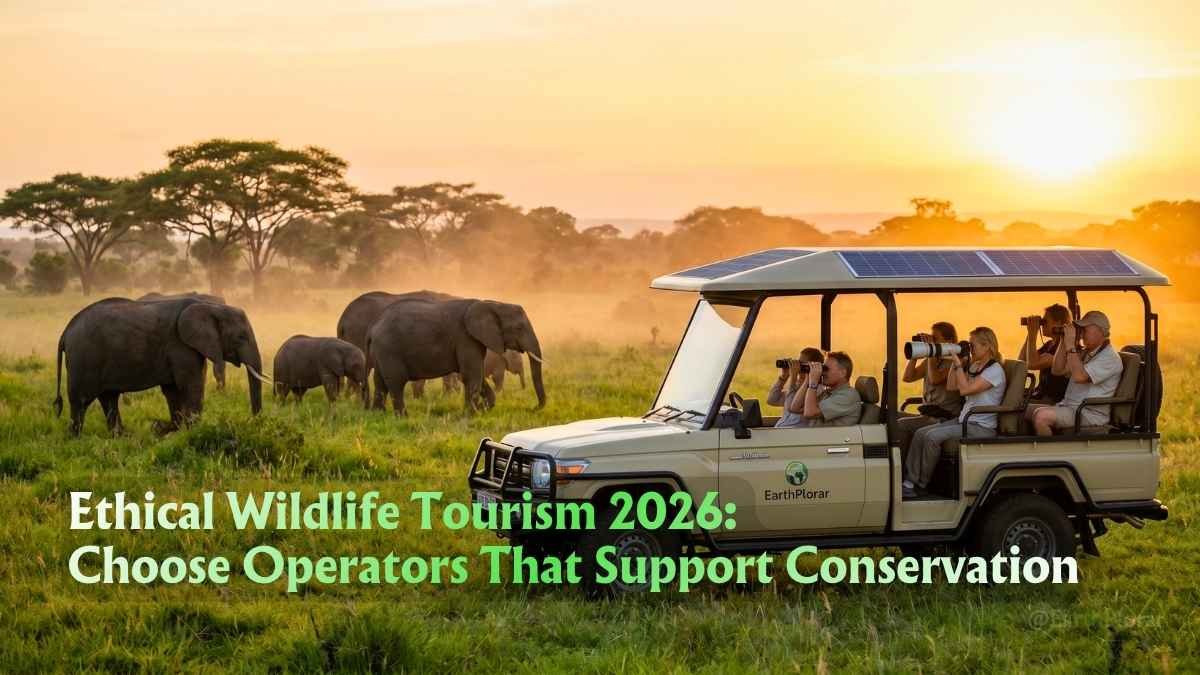
You’ve always dreamed of watching elephants roam the savanna at dawn, or locking eyes with a mountain gorilla in the mist-covered hills of Rwanda. Wildlife travel is one of the most profound experiences our planet offers. But here’s the question every mindful adventurer must ask before booking: is this operator actually helping the animals — or just profiting from them?
- What Is Ethical Wildlife Tourism? A Sustainable Travel Guide Perspective
- Why Ethical Wildlife Tourism Matters More Than Ever in 2026
- Red Flags: How to Spot Unethical Wildlife Operations
- The Green Checklist: How to Identify Ethical Wildlife Operators
- Eco-Friendly Travel Tips for Your Wildlife Trip
- Top Ethical Wildlife Experiences for 2026
- Ethical Wildlife Tourism and the Sustainable Travel Economy
- The Role of Technology in Ethical Wildlife Monitoring
- FAQ: Ethical Wildlife Tourism in 2026
- The Bottom Line: Your Journey Can Help Wildlife Survive
In this sustainable travel guide for 2026, we cut through the greenwashing to help you choose ethical wildlife tourism operators that genuinely support conservation. Because exploring the world responsibly isn’t just a trend — it’s a necessity.
What Is Ethical Wildlife Tourism? A Sustainable Travel Guide Perspective
Ethical wildlife tourism places the welfare of animals and the health of ecosystems above entertainment value. It operates on a simple but powerful principle: wildlife encounters should benefit the wild.
This means:
According to the Global Sustainable Tourism Council (GSTC), ethical wildlife operators must meet strict criteria around animal welfare, habitat protection, and community benefit to earn certification. It’s the gold standard — and the baseline you should demand.
Why Ethical Wildlife Tourism Matters More Than Ever in 2026
The numbers are stark. The World Wildlife Fund’s Living Planet Report found that global wildlife populations have declined by an average of 69% since 1970. Meanwhile, tourism — which generates over $1.5 trillion in global revenue — has enormous power to either accelerate that decline or reverse it.
Responsible tourism is no longer optional. The choices you make as a traveller directly shape:
The United Nations Environment Programme (UNEP) emphasises that community-based ecotourism is among the most effective tools we have for biodiversity conservation. Your travel wallet is a vote.
Red Flags: How to Spot Unethical Wildlife Operations
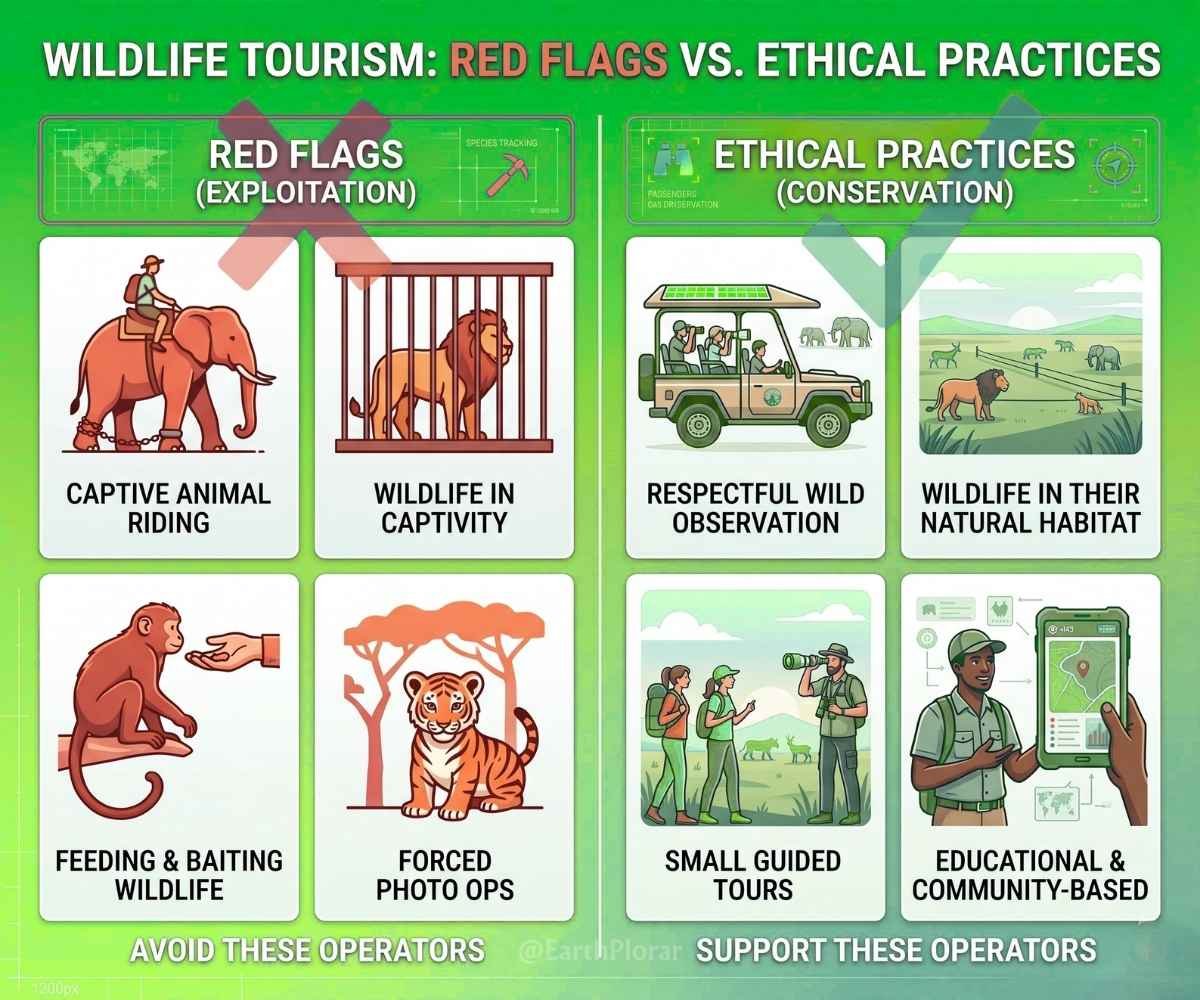
Before we explore what good looks like, you need to know what bad looks like. These are the non-negotiables. Walk away — no, run — from any operator that does the following:
🚩 Animal Performances and Unnatural Behaviours
Elephants painting pictures, tigers posing for selfies, dancing bears, dolphins jumping through hoops. These behaviours are only achieved through coercion, fear, and often physical abuse. No exceptions.
🚩 Direct Physical Contact with Wild Animals
Holding a lion cub, bathing a chained elephant, cuddling a slow loris. If tourists are paying to touch a wild animal up close, something is almost certainly wrong. Ethical sanctuaries maintain a respectful distance unless medical care requires otherwise.
🚩 Canned or Trophy Hunting Facilities
Some operators run “walking with lions” programs that feed into canned hunting pipelines. Lions raised for tourist interaction are often sold to hunting farms. This is one of the most egregious forms of wildlife exploitation dressed up as conservation.
🚩 No Verifiable Conservation Credentials
If an operator can’t show you a certification, a conservation partner, or a published impact report — they’re not transparent. Ethical operators are proud to show their receipts.
🚩 Overcrowded Enclosures or Visible Animal Distress
Trust your eyes. Repetitive swaying, aggression toward handlers, worn-down teeth, or blank-eyed animals in undersized spaces are signs of chronic stress. No photo is worth validating that suffering.
The Green Checklist: How to Identify Ethical Wildlife Operators
✅ 1. Look for Recognised Certifications
These third-party certifications provide genuine assurance:
| Certification | What It Covers |
|---|---|
| GSTC — Global Sustainable Tourism Council | Broad sustainable tourism standards including wildlife |
| Rainforest Alliance | Ecosystem protection + community benefit |
| Travelife | Sustainability criteria for tour operators |
| World Animal Protection | Specific wildlife welfare guidelines |
| African Wildlife Foundation | Conservation-led tourism in Africa |
✅ 2. Ask Pointed Questions Before You Book
Ethical operators welcome scrutiny. Try these:
If an operator gets defensive or vague, that tells you everything.
✅ 3. Prioritise Sanctuaries Over Attractions
The distinction matters enormously:
True wildlife sanctuaries:
Tourism attractions masquerading as sanctuaries:
Organisations like Born Free Foundation publish guides to help travellers distinguish between the two.
✅ 4. Choose Community-Led Experiences
Some of the most powerful ethical wildlife tourism in the world is run by the communities that have lived alongside these animals for generations.
Real-world examples of excellence:
Eco-Friendly Travel Tips for Your Wildlife Trip
Choosing the right operator is step one. How you behave on the ground matters just as much. Here are practical eco-friendly travel tips to carry with you:
On Safari or in the Field:
In Terms of Low Carbon Travel:
Top Ethical Wildlife Experiences for 2026
Here are EarthPlorar’s recommended ethical encounters for the year ahead — all verified against conservation criteria:
Ethical Wildlife Tourism and the Sustainable Travel Economy
Here’s the business case that the tourism industry is finally waking up to: ethical tourism is more profitable long-term.
A 2023 report by the International Ecotourism Society (TIES) found that:
Choosing operators that support conservation isn’t charity. It’s choosing the version of the travel economy that still has something worth visiting in 20 years.
The Role of Technology in Ethical Wildlife Monitoring
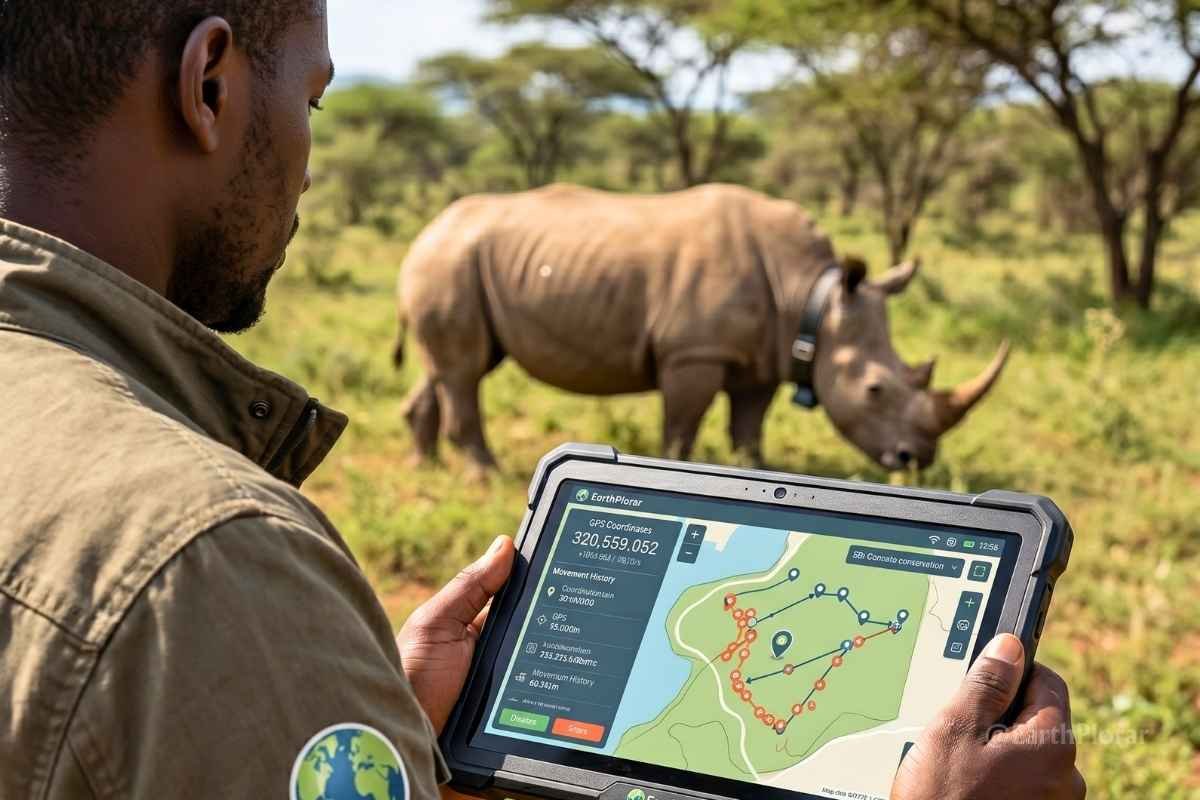
In 2026, ethical operators increasingly leverage technology to enhance conservation outcomes — and your visit may directly contribute:
These innovations make ethical wildlife tourism not just kinder — but smarter.
FAQ: Ethical Wildlife Tourism in 2026
What is the difference between ethical wildlife tourism and ecotourism?
Ecotourism is a broader term covering nature-based travel that minimises environmental impact. Ethical wildlife tourism is a subset that focuses specifically on the welfare of individual animals and wildlife populations. All ethical wildlife tourism can be ecotourism — but not all ecotourism sufficiently addresses animal welfare.
Is it ever okay to ride elephants?
No. The process of breaking an elephant for riding — called phajaan — involves prolonged isolation, restraint, and beatings to override the animal’s natural instincts. Even “humanely trained” riding elephants show chronic stress behaviours. No reputable conservation organisation endorses elephant riding as an ethical practice in 2026.
How can I verify that a wildlife sanctuary is legitimate?
Start by checking whether it holds certification from the GSTC, Rainforest Alliance, or is listed as a partner by recognised bodies like Born Free or World Animal Protection. Then ask directly for their latest conservation impact report. Legitimate sanctuaries publish these proudly. Also consult platforms like TripAdvisor’s Animal Welfare Policy and Responsible Travel for peer-reviewed operator assessments.
Does paying for wildlife tourism actually fund conservation?
Yes — when you choose the right operators. Studies from the African Wildlife Foundation show that community conservancies where tourism revenue is directly reinvested see measurably higher wildlife populations and reduced poaching rates compared to non-tourism areas. The key is directing your spend to operators with transparent funding models, not simply to any “eco” label.
What are the best ethical wildlife destinations for a first-time responsible traveller?
For first-timers, Costa Rica is often the gateway experience — it’s accessible, infrastructure is excellent, and the national park system is genuinely strong. Rwanda’s gorilla trekking is transformative if budget allows. Within Asia, the Elephant Nature Park in Thailand and Sri Lanka’s whale-watching in Mirissa (with ethical boat operators) are excellent entry points. See EarthPlorar’s Best Eco-Friendly Travel Destinations in 2026 for a full guide.
How do I reduce my carbon footprint on a wildlife trip?
Prioritise overland travel where possible. If flying is unavoidable, choose direct routes (take-off and landing produce the most emissions), fly economy class (business class has a carbon footprint up to 4x higher per seat), and offset through Gold Standard-certified programs. On the ground, choose solar-powered lodges, eat locally sourced food, and carry a reusable kit (bottle, cutlery, bags) to reduce waste in remote ecosystems.
The Bottom Line: Your Journey Can Help Wildlife Survive
The world’s wild places are not infinite. The animals that fill them are not guaranteed to be there for your children to see. But they can be — if enough of us choose to travel with purpose.
Ethical wildlife tourism is not about sacrifice. It is about choosing operators that turn your wanderlust into a force for conservation. It is about asking harder questions before you book. It is about understanding that the most extraordinary wildlife experiences on Earth are only possible if the wildlife is still there.
Here are your key takeaways:
📬 Stay on the Right Side of the Wild
Want more guides like this one delivered straight to your inbox? Subscribe to the EarthPlorar Newsletter and join a community of mindful adventurers who travel with purpose. Every issue brings you vetted operator reviews, conservation news, and practical sustainable travel tips for explorers who give a damn.