





Some places stop you mid-breath. They remind you that you are small, the planet is vast, and every wild corner of it deserves to be protected.
The 7 natural wonders of the world do exactly that. This legendary list — recognized by CNN and adopted globally as the definitive ranking of Earth’s most extraordinary landscapes — spans six continents and billions of years of geological time. Aurora-lit Arctic skies. A canyon carved by five million years of river patience. A reef alive with thirty thousand species. A waterfall wide enough to swallow a city block whole.
But here is the truth no travel brochure tells you: visiting these places is a privilege, not a right. Every footprint counts. Every flight matters. Every dollar you spend either supports conservation or threatens it.
This mindful travel guide exists to change the way you explore. We will take you through all seven wonders, give you expert travel insights, and show you how to experience the world’s greatest natural landmarks responsibly — so they exist for the next generation of explorers.
Let us begin.
What Are the 7 Natural Wonders of the World?
The official list, popularized by CNN in 1997, includes:
Each site is a product of forces humans can barely comprehend: tectonic collisions, volcanic eruptions, glacial erosion, coral biology evolving over millennia. Together, they represent the full spectrum of our planet’s creative power.
A Mindful Travel Guide to All 7 Natural Wonders of the World
1. Aurora Borealis — The Dancing Skies
What Makes It a Wonder
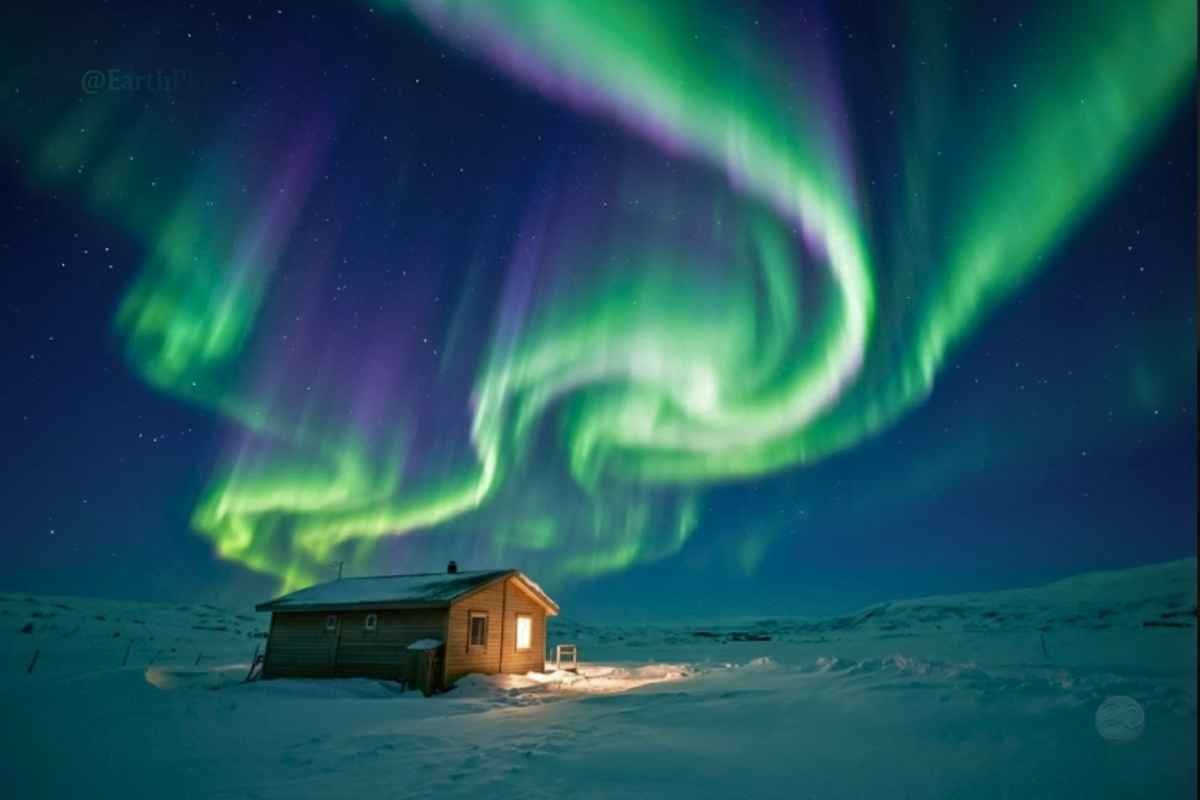
Solar particles crash into Earth’s magnetosphere at speeds of up to 72 million kilometers per hour. The collision ignites the atmosphere in waves of green, violet, pink, and white light. The result — the Aurora Borealis, or Northern Lights — is one of the most humbling spectacles in the natural world.
No photograph fully captures it. The lights move. They pulse. They respond to invisible solar winds in real time. You do not watch the aurora. You witness it.
Best Places to See the Northern Lights
The auroral oval — the ring around the magnetic North Pole where sightings are most frequent — passes through:
Best Time to Visit
The aurora season runs from late September through early April, when nights are long and dark. Peak solar activity follows an 11-year cycle; the current Solar Cycle 25 is near its maximum, making 2025–2026 an exceptional window for sightings.
Mindful Travel Tips
Conservation Focus
The Arctic is warming four times faster than the global average, according to the Arctic Monitoring and Assessment Programme (AMAP). Melting sea ice threatens polar bears, walrus, and the entire Arctic food web. Support the World Wildlife Fund’s Arctic Programme directly from your travel budget.
EarthPlorar Insight: The aurora is not just a visual spectacle — it is proof that Earth’s magnetic field shields all life from lethal solar radiation. Protect it by advocating for climate policy.
2. The Grand Canyon — A Geological Masterpiece
What Makes It a Wonder
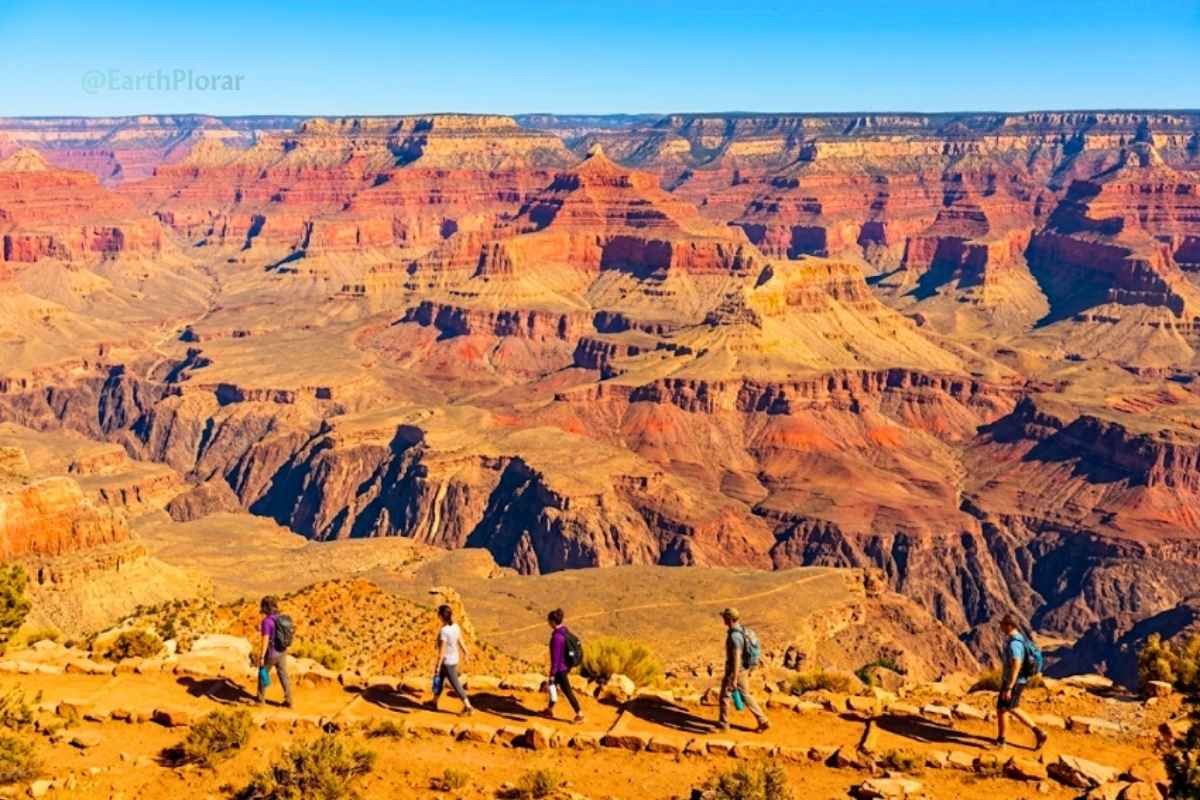
The Colorado River has carved the Grand Canyon for approximately five to six million years. The result is a gorge 446 kilometers long, 29 kilometers wide at its broadest point, and 1.6 kilometers deep — exposing two billion years of Earth’s geological history in a single cross-section of layered rock.
Standing at the South Rim, looking down through bands of red Kaibab limestone, Coconino sandstone, and ancient Vishnu schist, you are reading a book written before life existed on land.
Key Visitor Zones
| Zone | Experience | Accessibility |
|---|---|---|
| South Rim | Most scenic overlooks, year-round access | High |
| North Rim | Quieter, forested, 300m higher elevation | Seasonal (May–Oct) |
| Inner Canyon / Bright Angel Trail | Immersive hiking into the gorge | Strenuous |
| Colorado River Rafting | Multi-day expedition through the canyon | Specialist guided |
Responsible Travel Tips
Conservation Focus
The Grand Canyon faces threats from uranium mining on adjacent lands and unsustainable tourism pressure. The Grand Canyon Trust campaigns for full monument protection and tribal sovereignty. Consider donating directly.
For gear that respects the environment on your hike, explore our Eco-Friendly Gear Reviews.
3. The Great Barrier Reef — The Living Labyrinth
What Makes It a Wonder
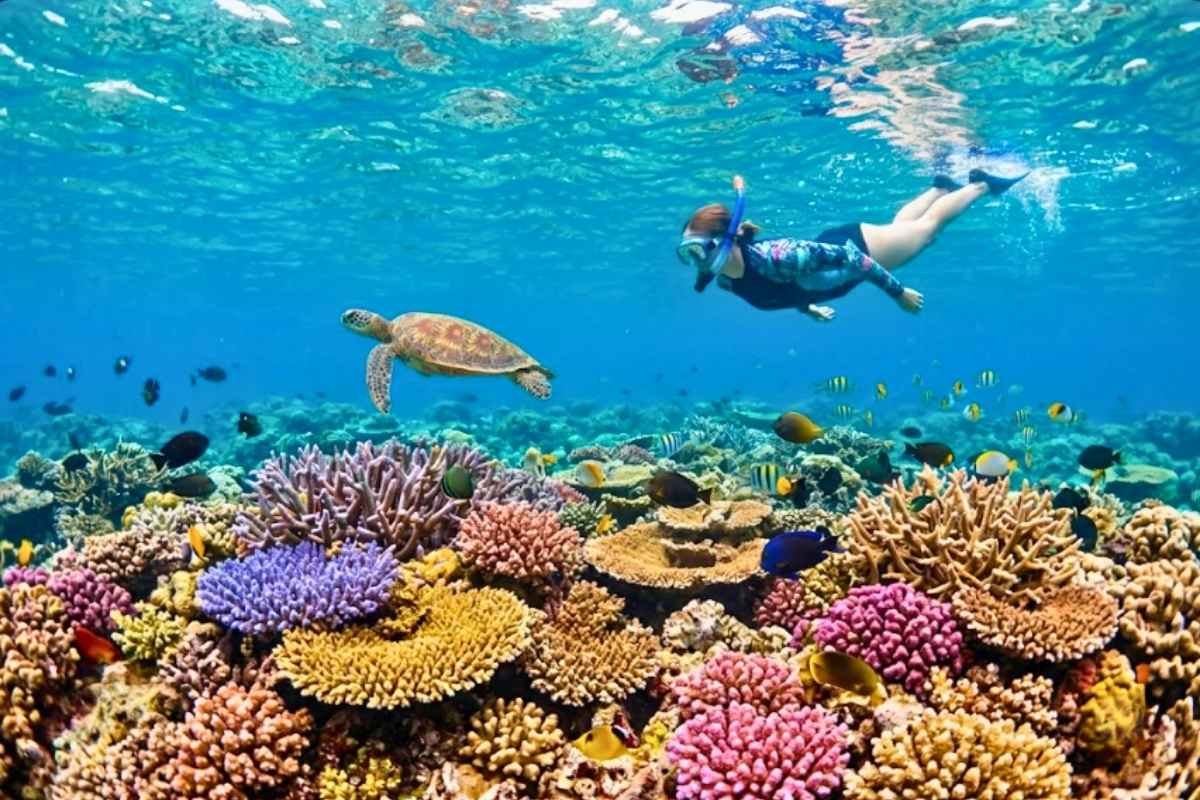
The Great Barrier Reef is the largest living structure on Earth, visible from space. It spans 2,300 kilometers along Australia’s northeast coast and encompasses:
It is not one reef. It is a continent of coral — a living, breathing organism that produces its own weather, shelters juvenile fish, and protects coastlines from storm surges.
The Crisis You Cannot Ignore
The Great Barrier Reef is in crisis. Mass bleaching events — caused by sea temperatures just 1–2°C above normal — have struck in 1998, 2002, 2016, 2017, 2020, 2022, and again in 2024. Each event kills coral that took decades to grow.
The Australian Institute of Marine Science (AIMS) reports that while some northern reef sections have recovered partially between events, the southern reef — historically more resilient — is now experiencing its first major bleaching cycles.
This is a place you must visit now, before it changes further — and visit in a way that funds its protection.
Responsible Reef Travel Tips
4. The Harbor of Rio de Janeiro — Nature and City Entwined
What Makes It a Wonder
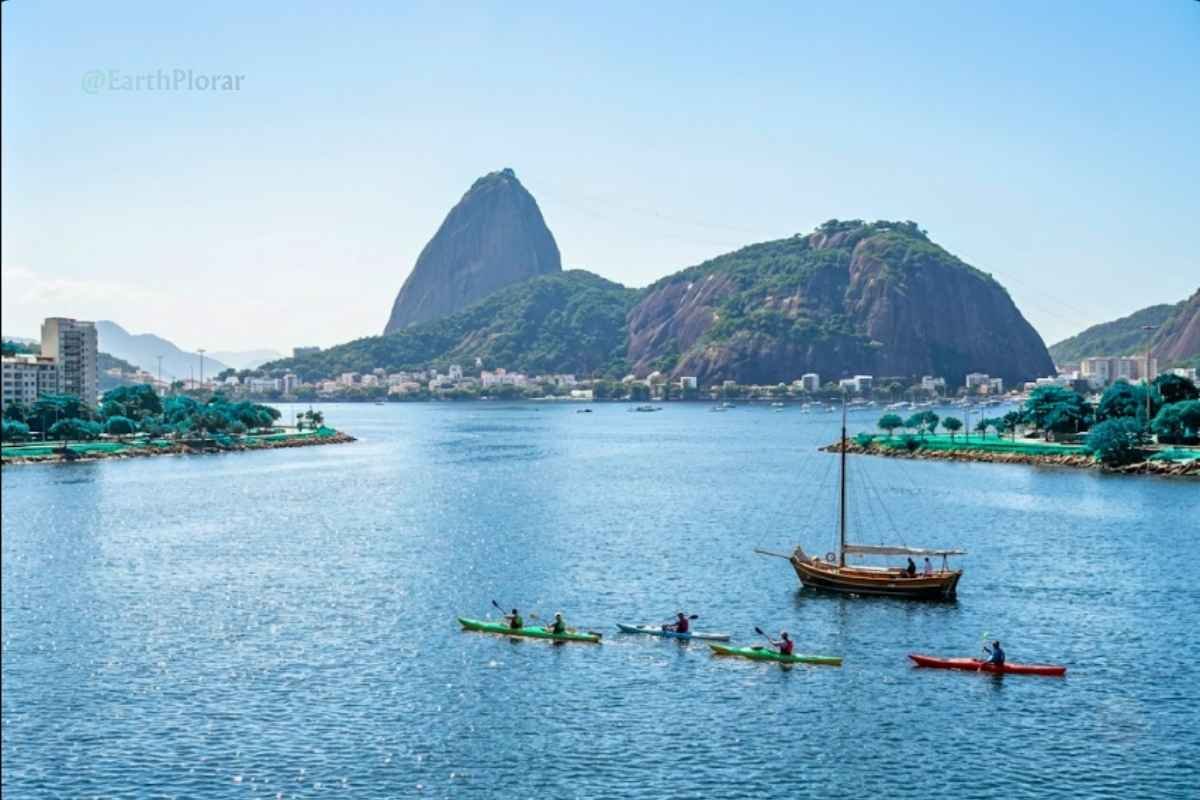
Guanabara Bay in Rio de Janeiro is one of the world’s most spectacular natural harbors, formed by the Atlantic Ocean flooding a river valley approximately 11,000 years ago. Granite peaks — including the iconic Sugarloaf Mountain (Pão de Açúcar) and Corcovado, on which Christ the Redeemer stands — erupt directly from the water’s edge.
This is the only wonder on the list where a major metropolis and a natural wonder share the same geography. The juxtaposition is the spectacle.
What to Prioritize
Responsible Travel in Rio
Rio is a city of profound beauty and profound inequality. Responsible travel here means:
Conservation Focus
Guanabara Bay receives treated and untreated sewage from a population of 12 million people. Cleanup efforts are ongoing but underfunded. Supporting Brazilian environmental NGOs like Instituto SOS Mata Atlântica directly funds coastal monitoring programs.
5. Mount Everest — The Roof of the World
What Makes It a Wonder
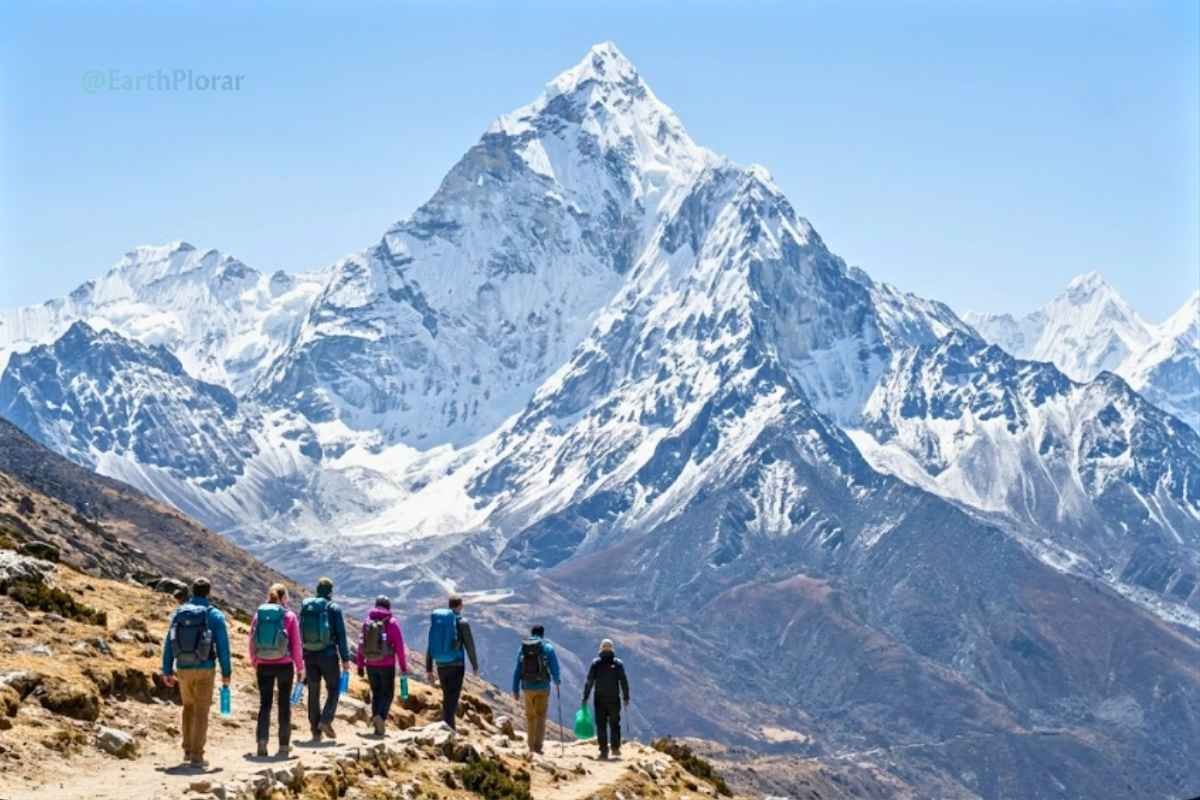
At 8,848.86 meters above sea level — the precise measurement confirmed by China and Nepal in 2020 — Mount Everest is the highest point on Earth’s surface. It sits at the collision zone of the Indian and Eurasian tectonic plates, still rising approximately four millimeters per year.
The Khumbu Glacier. The Hillary Step. The Death Zone above 8,000 meters, where the air holds only one-third the oxygen of sea level. Everest is not just a mountain. It is a threshold between human endurance and impossibility.
The Overcrowding Crisis
In recent years, images of queues of hundreds of climbers bottlenecked on Everest’s summit ridge have gone viral — and for good reason. In 2023, Nepal issued 478 summit permits in a single season. The mountain has become littered with abandoned tents, oxygen cylinders, and — disturbingly — human remains.
This is unsustainable. Nepal’s government has introduced new permit regulations, requiring climbers to have prior high-altitude experience. But enforcement remains inconsistent.
Mindful Ways to Experience Everest Without Summiting
You do not need to climb Everest to experience its majesty. Consider:
Responsible Everest Travel Tips
Conservation Focus
The Sagarmatha Next initiative, based at Namche Bazaar, is building infrastructure to manage waste removal from the high mountain environment. It is directly worth supporting.
For advice on high-altitude trekking essentials, explore our Skills & Guides section.
6. Parícutin Volcano — Born in a Cornfield
What Makes It a Wonder
On February 20, 1943, a Mexican farmer named Dionisio Pulido watched a crack open in his cornfield near the village of San Juan Parangaricutiro in Michoacán. By the following morning, a cone had formed. Within a week, it stood taller than a ten-story building. Within a year, it exceeded 336 meters.
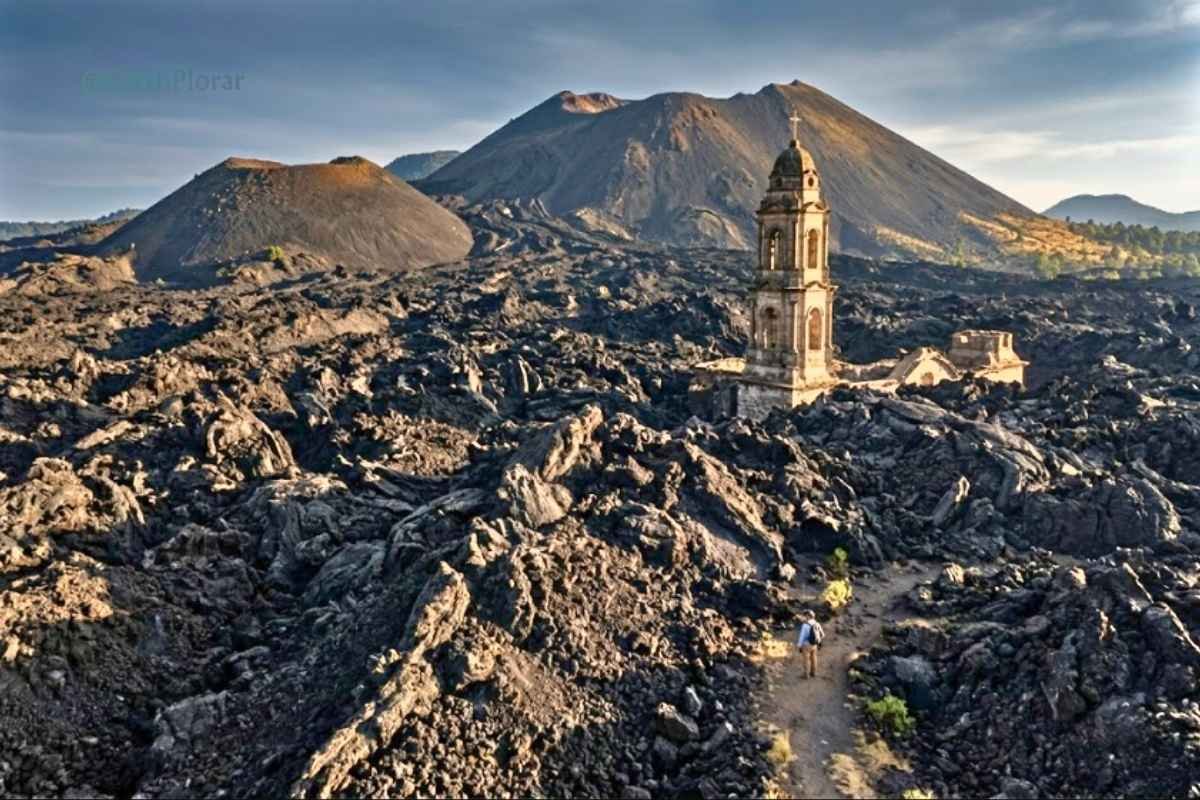
Parícutin is one of the only volcanoes in recorded history where humans witnessed its birth, growth, and death in a single lifespan. It erupted for nine years, burying two villages under lava and ash. Then, in 1952, it went silent. Forever.
Today, the stone church towers of San Juan Parangaricutiro still jut above the solidified lava field — one of the most surreal and moving landscapes on Earth.
Why Parícutin Matters
Parícutin makes the natural wonders list not for its size — it is the smallest wonder — but for what it represents: the planet’s creative violence, witnessed and documented by human eyes. It is a reminder that Earth’s surface is not static. It breathes, shifts, and rebuilds itself continually.
How to Visit Responsibly
Parícutin lies within the Purépecha indigenous region of Michoacán. Access is most ethical through community-led tourism:
Conservation Focus
The Michoacán monarch butterfly biosphere reserve lies within 100 km of Parícutin. Combine your visit with a trip to the Monarch Butterfly Biosphere Reserve — a UNESCO World Heritage Site — and support the Monarch Butterfly Fund.
For more on Mexico’s extraordinary ecological richness, read our piece on Wildlife & Biodiversity in Latin America.
7. Victoria Falls — Where the Smoke Thunders
What Makes It a Wonder
The Kololo people of southern Africa named it Mosi-oa-Tunya — “The Smoke That Thunders.” David Livingstone renamed it Victoria Falls in 1855. The original name is far more accurate.
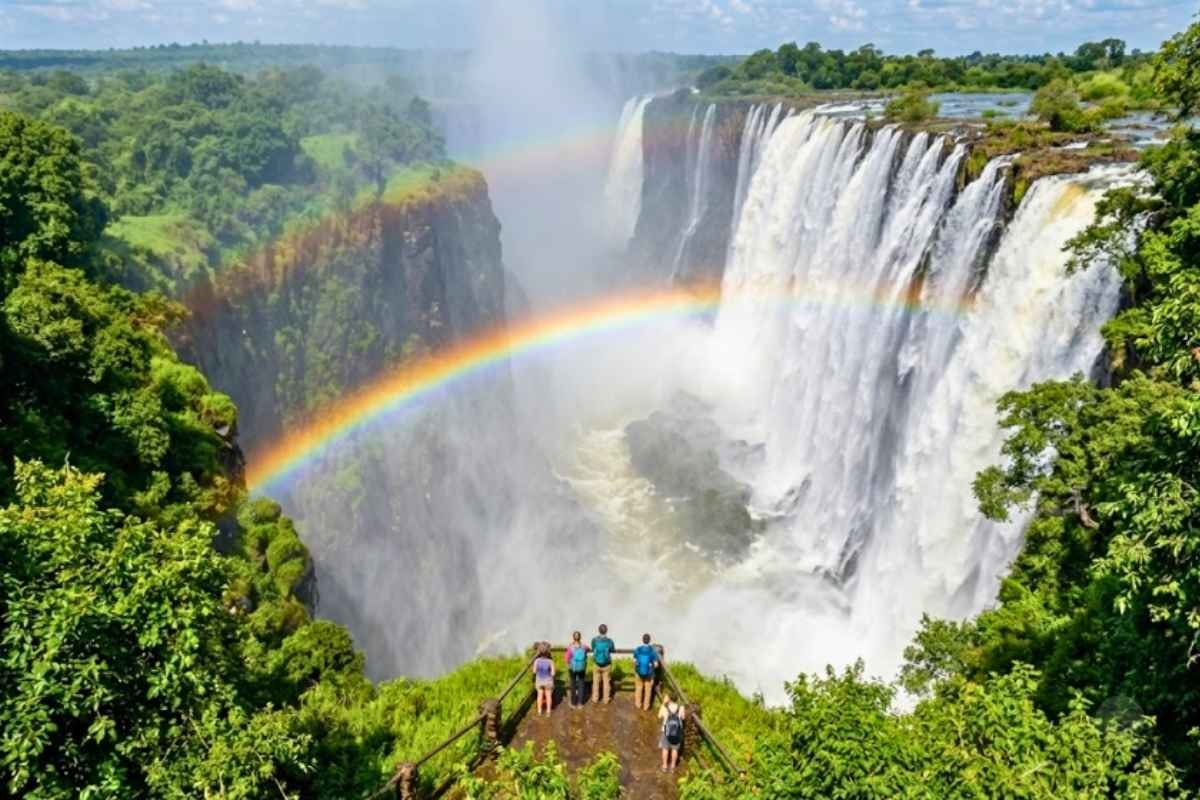
Victoria Falls is the world’s largest sheet of falling water — not the tallest (Angel Falls in Venezuela holds that record), and not the widest (Khone Falls in Laos), but the largest by combined width and height. At peak flow between February and May:
The roar is audible from 40 kilometers. The mist soaks you before you can see the falls. When you finally see them, nothing prepares you.
Two Countries, One Wonder
Victoria Falls straddles the border of Zambia and Zimbabwe. Each offers a completely different perspective:
Zimbabwe side (Livingstone, Zimbabwe town):
Zambia side (Livingstone, Zambia town):
Responsible Travel Tips
Conservation Focus
The Zambezi River is under pressure from hydroelectric development upstream. The proposed Batoka Gorge dam, if built, would reduce the falls’ flow by up to 40% during dry seasons. The Zambezi Society campaigns for sustainable river management — support their work.
For further reading on responsible African wildlife tourism, see our guide on Ethical Wildlife Tourism: Choose Operators That Support Conservation.
Practical Mindful Travel Principles for All 7 Natural Wonders
Regardless of which wonder you visit, these core principles protect the places you love most:
The Mindful Traveler’s Code
Sustainable Travel Planning Resources
FAQs About the 7 Natural Wonders of the World
What are the official 7 natural wonders of the world?
The official list, as popularized by CNN in 1997, includes: the Aurora Borealis, the Grand Canyon, the Great Barrier Reef, the Harbor of Rio de Janeiro, Mount Everest, Parícutin Volcano, and Victoria Falls. These seven were selected based on their extraordinary natural beauty, geological or biological significance, and their power to inspire awe across cultures.
Are the 7 natural wonders of the world the same as the 7 wonders of the ancient world?
No. The Seven Wonders of the Ancient World (such as the Colossus of Rhodes and the Hanging Gardens of Babylon) are historical man-made structures — most of which no longer exist. The 7 natural wonders of the world are entirely geological or biological formations created by Earth’s own processes, with no human construction involved.
How do I visit the 7 natural wonders of the world sustainably?
Sustainable visitation means: booking with certified local operators, using reef-safe or eco-friendly products, offsetting your carbon emissions, hiring Indigenous or community guides, spending money locally rather than with international chains, and following all leave-no-trace principles at each site. Our full Sustainable Travel Guide covers every step of the planning process.
Is it possible to see all 7 natural wonders in one trip?
Technically possible, but deeply inadvisable from a sustainability standpoint. The seven wonders span six continents — visiting all in a single trip requires an enormous number of long-haul flights, producing significant carbon emissions. A far more mindful approach is to group wonders by region across multiple trips over several years, allowing for slower, deeper exploration and a dramatically lower environmental footprint.
Which of the 7 natural wonders of the world is most endangered?
The Great Barrier Reef faces the most urgent and measurable existential threat. Repeated mass coral bleaching events, caused directly by climate-change-driven ocean warming, have already killed significant portions of the reef. At current rates of warming, coral reefs globally could experience annual bleaching events by 2050, making recovery between events impossible. The reef needs both on-the-ground conservation support and systemic climate action.
What is the best time of year to visit the natural wonders?
It varies significantly by wonder:
- Aurora Borealis: September–April (dark polar nights)
- Grand Canyon: March–May or September–November (avoiding summer heat and winter ice)
- Great Barrier Reef: June–October (coolest water, lowest bleaching risk)
- Rio Harbor: April–June or August–October (dry season, moderate temperatures)
- Mount Everest (EBC trek): March–May or September–November (pre- and post-monsoon)
- Parícutin Volcano: November–April (dry season in Michoacán)
- Victoria Falls: February–May for maximum flow; August–December for Devil’s Pool access
Do I need a guide to visit the 7 natural wonders?
For some wonders, a guide is legally required or strongly advised — Parícutin (community guide essential), Mount Everest treks (Sherpa guide required above certain altitudes), and Victoria Falls boat and gorge experiences. For others, such as the Grand Canyon and Rio Harbor, independent visits are fully possible but a local guide adds irreplaceable cultural and ecological context. Guides also keep money in local economies — always a win.
Protect Our Planet’s Masterpieces: Final Thoughts
The 7 natural wonders of the world are not destinations. They are obligations.
To visit the aurora is to witness Earth’s magnetic shield. To stand at the Grand Canyon’s rim is to read four billion years of geological time. To snorkel above coral at the Great Barrier Reef is to enter a living city older than human civilization.
These places gave the world its sense of wonder long before any of us arrived. Our job — as explorers, travelers, and citizens of this planet — is to ensure they continue to do so long after we are gone.
Here are the three things you can do right now:
Go Deeper With EarthPlorar
This article is just the beginning. EarthPlorar exists to help you explore the world with expertise, responsibility, and genuine wonder.
Subscribe to the EarthPlorar newsletter for weekly deep-dives on the world’s most extraordinary places — and the science and stories behind them. Every edition is written by explorers, for explorers.
The planet is extraordinary. Travel like it matters — because it does.