







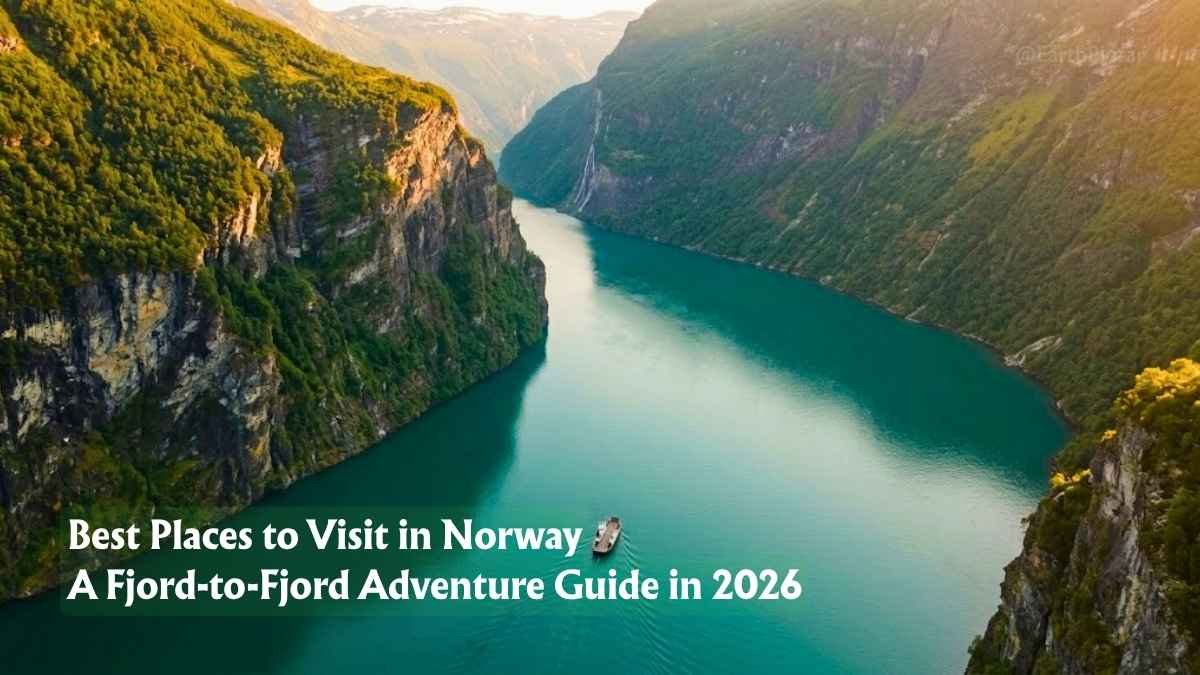
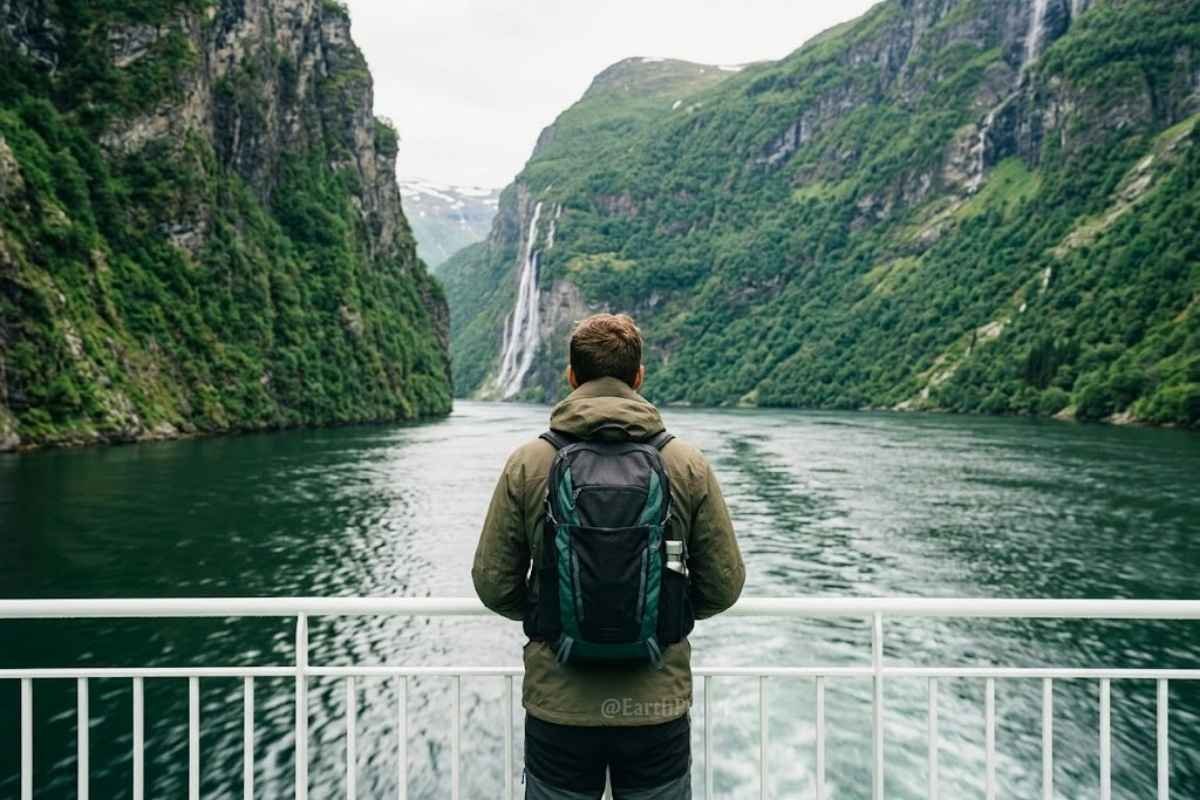
The water in Nærøyfjord is so still some mornings that the cliffs above it seem to float twice — once in stone, once in reflection. I stood on a ferry deck there with a lukewarm coffee going cold in my hand, and I forgot to drink it for twenty minutes. That’s the thing about Norway: it doesn’t ease you in. It just hands you a view that rearranges your sense of scale and waits for you to catch up.
If you’re searching for the best places to visit in Norway, you’ve probably already seen the postcard fjords. What you need now is a real route — one that balances iconic stops with the quieter places that make a Norway trip feel like yours instead of a screenshot from someone else’s feed. This guide covers twelve destinations, how to choose between them, and the practical details that actually matter once you’re booking flights.
Why Norway Belongs on Every Adventurer’s List
Norway packs glacier-carved fjords, the Arctic Circle, the northern lights, and some of Europe’s best-preserved wooden architecture into one country roughly the size of New Mexico. It’s also one of the most naturally protected travel destinations on Earth — strict land-use laws and the allemannsrett (“right to roam”) tradition mean wild spaces stay wild, which is rare and worth respecting as a visitor. If you’ve already explored Iceland’s volcanic landscapes or Earth’s other natural wonders, Norway scratches a similar itch with a softer, greener edge.
How to Choose Where to Go in Norway
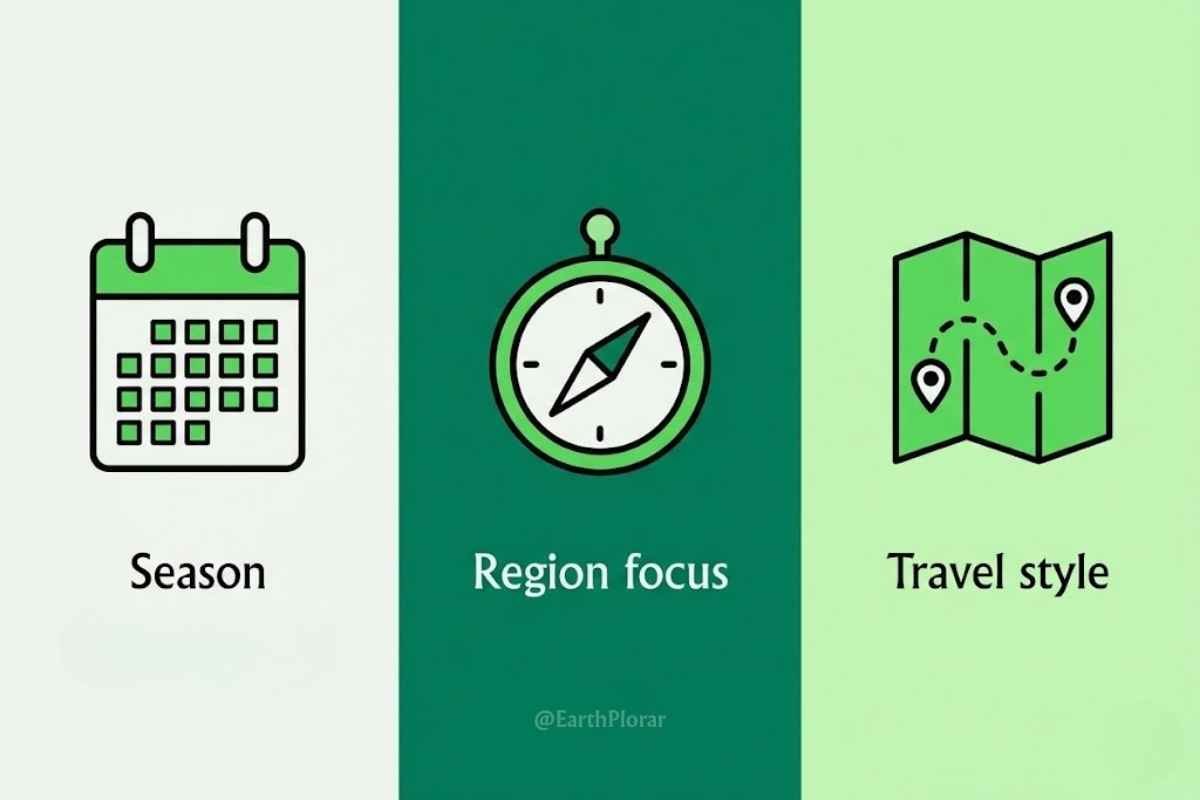
Before you lock in your itinerary, answer three questions:
- What season are you traveling in? Summer (June–August) means the midnight sun, open mountain passes, and fjord cruises. Winter (October–March) means the northern lights, but several scenic roads close.
- Fjords, cities, or the Arctic? You genuinely cannot do all three well in under 10 days — pick a primary focus and treat the rest as a future trip.
- What’s your travel style? Norway rewards both slow, train-and-ferry travelers and fast-paced road-trippers, but the routes you build look very different depending on which one you are.
Quick Comparison: Norway’s Best Regions at a Glance
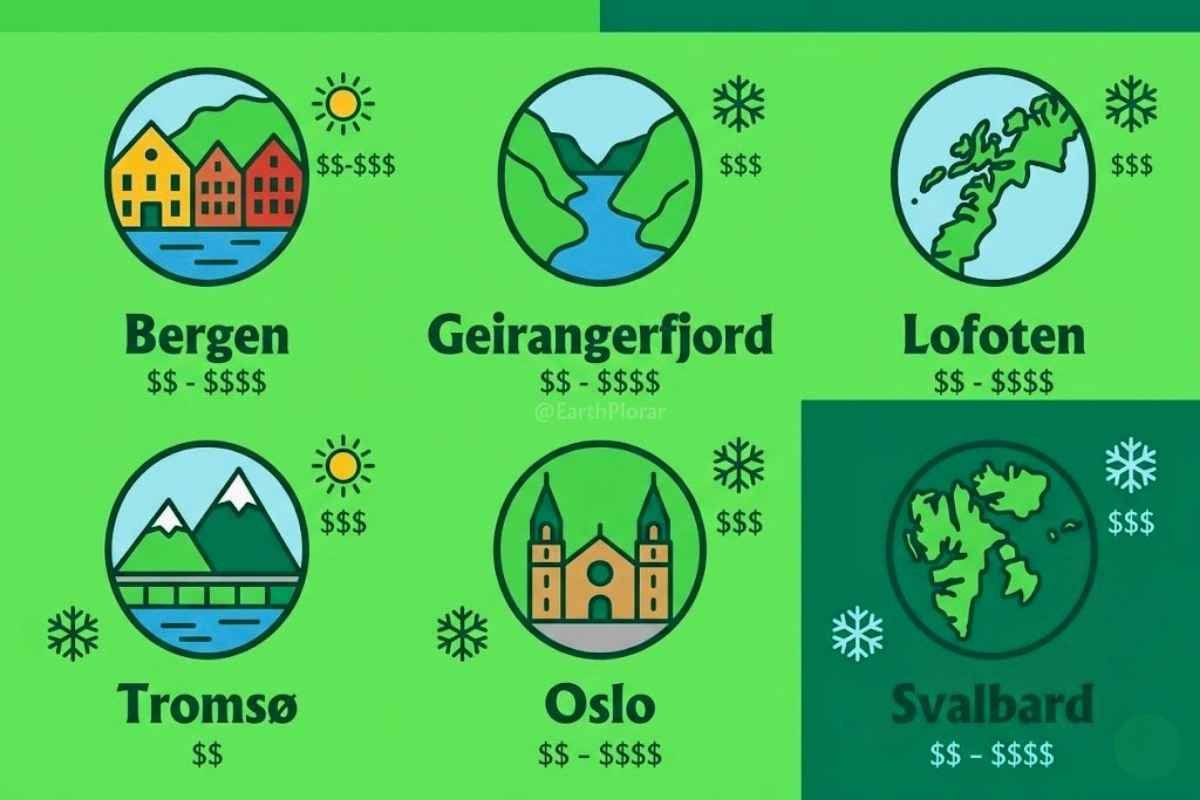
| Destination | Best For | Best Time to Visit | Budget Level |
|---|---|---|---|
| Bergen | First-timers, gateway to fjords | May–Sept | $$ |
| Geirangerfjord | Iconic fjord scenery | June–Aug | $$$ |
| Nærøyfjord | UNESCO fjord, quieter crowds | May–Sept | $$$ |
| Lofoten Islands | Photography, hiking | June–Aug | $$$ |
| Tromsø | Northern lights, Arctic culture | Oct–March | $$ |
| Oslo | City culture, museums | Year-round | $$ |
| Trondheim | History, university-town energy | May–Sept | $$ |
| Ålesund | Art Nouveau architecture, coastal drives | June–Aug | $$ |
| Atlantic Road | Scenic driving | May–Sept | $$ |
| Jotunheimen | High-altitude hiking | July–Aug | $$ |
| Flåm | Scenic rail, fjord access | May–Sept | $$ |
| Svalbard | Polar wildlife, extreme remoteness | April–Aug | $$$$ |
Practical Norway Trip Planning Basics
A few logistics worth sorting before you book flights to go the best places to visit in Norway:
- Visa: Norway is part of the Schengen Area. Citizens of the US, UK, Canada, Australia, and most EU countries can enter visa-free for up to 90 days within a 180-day period; check current requirements for your nationality before traveling.
- Currency: Norwegian krone (NOK). Card payments are accepted almost everywhere, including small shops and public toilets — carrying cash is rarely necessary.
- Language: Norwegian is the official language, but English is spoken fluently across the tourism industry, including in rural fjord towns.
- Getting around: A mix of domestic flights, the Norwegian rail network (NSB/Vy), coastal ferries, and rental cars covers the whole country. For fjord-heavy itineraries, a rental car or campervan gives the most flexibility; for a city-plus-fjord trip, trains and ferries are enough.
- Time needed: Plan a minimum of 7 days for a single-region trip; 10–14 days if you’re combining fjords with the Arctic or Lofoten.
The 12 Best Places to Visit in Norway in 2026
1. Bergen — The Gateway to the Fjords
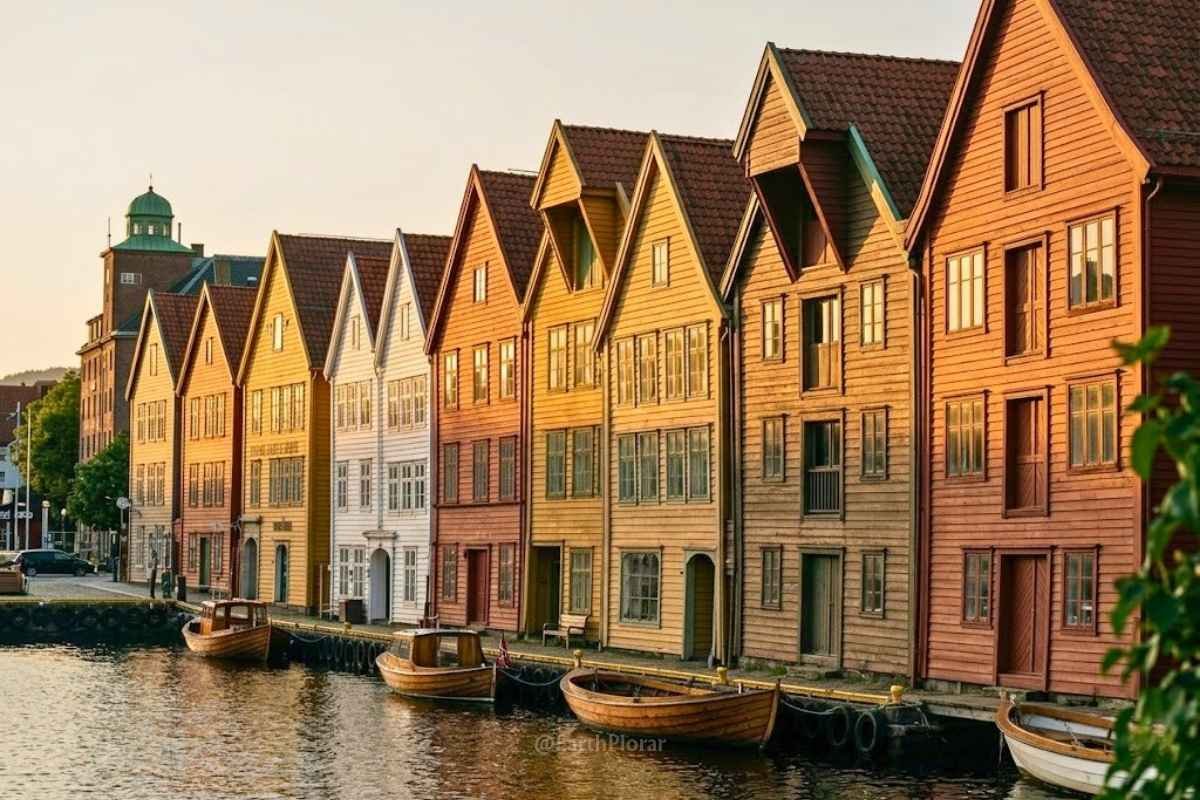
Bergen’s UNESCO-listed Bryggen wharf, with its row of leaning wooden warehouses, is most people’s first real “Norway moment.” It’s also the most practical jumping-off point for fjord excursions, with direct rail and ferry connections inland.
- Best for: First-time visitors, easy fjord access
- Don’t miss: The Fløibanen funicular for a city-and-fjord panorama at sunset
- Getting there: Direct flights from Oslo (50 min) or major European hubs; train from Oslo takes about 7 hours through some of Norway’s best scenery
2. Geirangerfjord
This is the fjord on every brochure, and it earns the reputation. Waterfalls like the Seven Sisters drop directly into the water, and the switchback road up to Dalsnibba viewpoint delivers one of the best overlooks in the country.
- Getting there: Closest airport is Ålesund; most visitors arrive by car or fjord cruise from Bergen/Ålesund
- Best for: First-time fjord cruisers, dramatic waterfall views
- Don’t miss: The Trollstigen (“Troll’s Path”) mountain road just north of the fjord
3. Nærøyfjord
A UNESCO World Heritage fjord, narrower and quieter than Geiranger, reachable by the famous “Norway in a Nutshell” rail-and-ferry route from Bergen.
- Getting there: Part of the “Norway in a Nutshell” route from Bergen; no car required
- Best for: Travelers who want fjord scenery without the cruise-ship crowds
- Don’t miss: The ferry leg between Gudvangen and Flåm — the narrowest, most dramatic stretch
4. Lofoten Islands
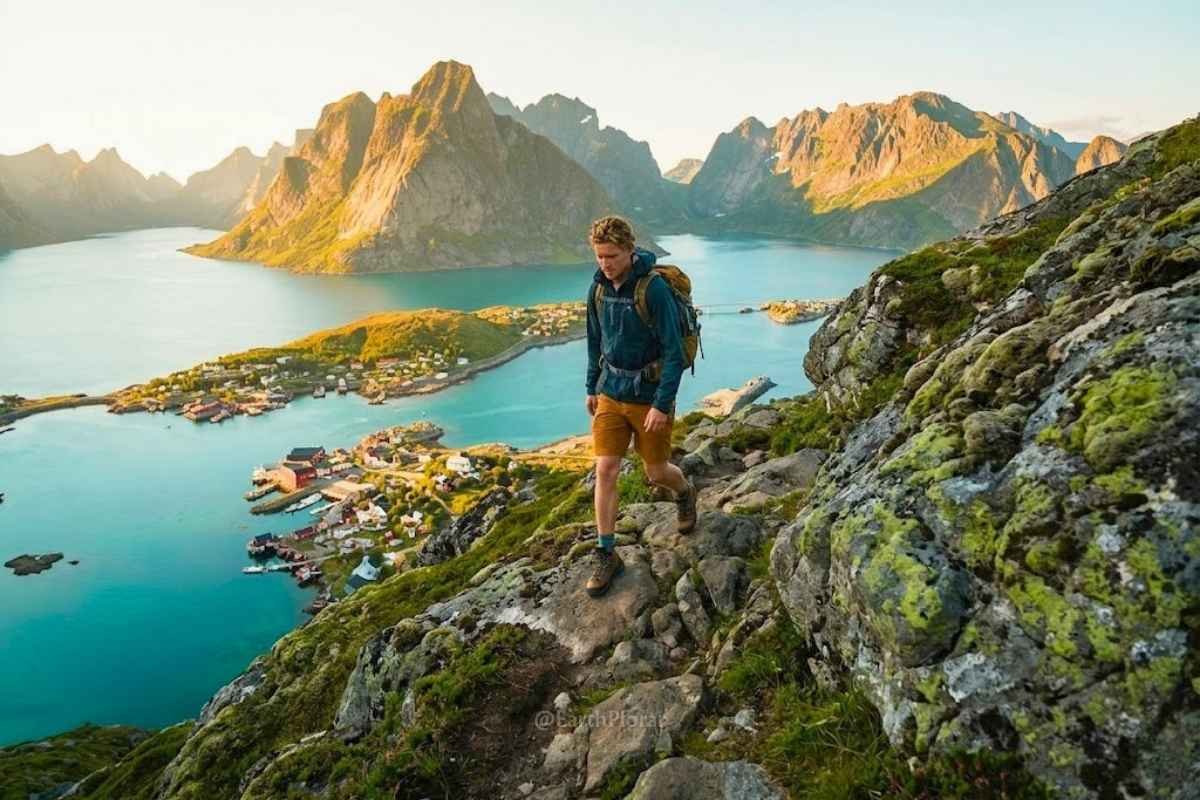
Jagged peaks rising straight out of the sea, fishing villages painted in deep red ochre, and some of Norway’s most photographed hiking trails (Reinebringen, Festvågtind). Go in summer for the midnight sun; go in winter for orcas and northern lights, but expect serious weather.
- Getting there: Fly into Harstad/Narvik or Leknes; ferries and a coastal car route connect the islands
- Best for: Photographers, hikers, dramatic coastal scenery
- Don’t miss: Sunrise (or midnight-sun “sunset”) from the Reinebringen viewpoint above Reine
5. Tromsø
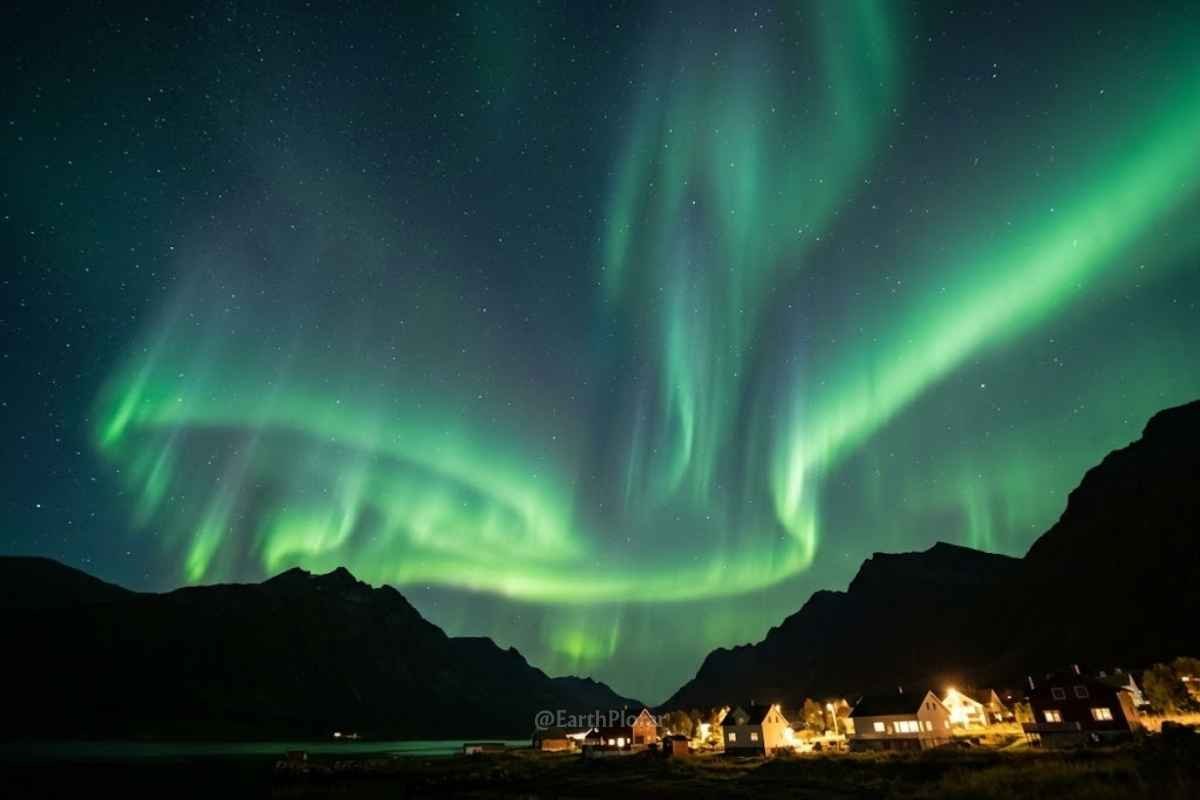
Sitting comfortably inside the Arctic Circle, Tromsø is the most accessible base for chasing the northern lights, with a real city infrastructure — restaurants, a cathedral, a cable car — wrapped around the wilderness.
- Getting there: Direct flights from Oslo (under 2 hours); also reachable by the Hurtigruten coastal ferry
- Best for: Northern lights chasers who still want city comforts
- Don’t miss: The Fjellheisen cable car for an above-the-clouds aurora vantage point
6. Oslo
Norway’s capital rewards a couple of unhurried days: the Vigeland sculpture park, the Munch Museum, and the Norwegian Maritime Museum’s Kon-Tiki exhibit are all worth a half-day each.
- Getting there: Norway’s main international gateway, with direct flights from most of Europe and several intercontinental routes
- Best for: City culture, museums, an easy starting or ending point
- Don’t miss: The harbor-front Opera House roof for a free city skyline view
7. Trondheim
Norway’s old religious capital, anchored by the Gothic Nidaros Cathedral, with a lively university-town energy that balances the history well.
- Getting there: Direct flights from Oslo (1 hour); also a stop on the main north-south rail line
- Best for: History lovers, a quieter alternative to Oslo or Bergen
- Don’t miss: The colorful Bakklandet district along the Nidelva river
8. Ålesund
An Art Nouveau port town rebuilt after a fire in 1904, with a harborfront skyline that looks almost Mediterranean against the Norwegian coastline.
- Getting there: Direct flights from Oslo and Bergen; a common stop on fjord road trips
- Best for: Architecture, a base for Geirangerfjord day trips
- Don’t miss: The 418-step climb to the Aksla viewpoint over the islands and harbor

9. The Atlantic Road
Less a destination than a drive — a series of bridges and causeways hopping between small islands, often listed among the most scenic road trips in the world.
- Getting there: Best reached by rental car from Molde or Kristiansund
- Best for: Road-trippers, dramatic North Sea views
- Don’t miss: The Storseisundet Bridge, the route’s most-photographed crossing
10. Jotunheimen National Park
Norway’s highest peaks, including Galdhøpiggen, plus the famous Besseggen ridge hike — a full-day trek with views over two differently colored lakes.
- Getting there: A few hours’ drive from Oslo or Bergen; limited public transport, a car helps
- Best for: Serious hikers, high-altitude scenery
- Don’t miss: The Besseggen ridge hike (book the boat shuttle in advance in peak season)
11. Flåm
A village of barely 400 people that anchors one of the steepest standard-gauge railway journeys on Earth, the Flåm Railway, descending toward Aurlandsfjord.
- Getting there: By train via Myrdal on the Bergen–Oslo line, then the branch railway down to Flåm
- Best for: Scenic rail travel, a low-effort fjord-region base
- Don’t miss: Pairing the Flåm Railway with a Nærøyfjord ferry for a full loop without a car
12. Svalbard
The wildest entry on this list — polar bears, glaciers, and a town (Longyearbyen) that’s the northernmost permanent settlement most travelers will ever reach. It’s expensive and remote, but unmatched for genuine Arctic wilderness.
- Getting there: Direct flights from Oslo or Tromsø; no roads connect Svalbard to mainland Norway
- Best for: Polar wildlife, true Arctic remoteness
- Don’t miss: A guided glacier or fjord boat tour — required by law if you want to leave Longyearbyen’s boundary
Sample Norway Itineraries
7-Day Fjord Highlights Route
Bergen (2 nights) → Flåm via the Norway in a Nutshell route (1 night) → Nærøyfjord ferry to Gudvangen → Geirangerfjord and Ålesund (2 nights) → return to Bergen or fly out of Ålesund.
12-Day Fjords + Arctic Route
Oslo (1 night) → Bergen (2 nights) → Flåm/Nærøyfjord (1 night) → Geirangerfjord/Ålesund (2 nights) → fly to Tromsø (3 nights, northern lights or midnight sun depending on season) → optional Lofoten extension (3 nights) before flying home.
If a route this fjord-and-Arctic-heavy feels familiar, it’s a similar shape to the loop in our Iceland Adventure Guide — both countries reward building the trip around one core landscape rather than rushing between regions.
Responsible Travel in Norway
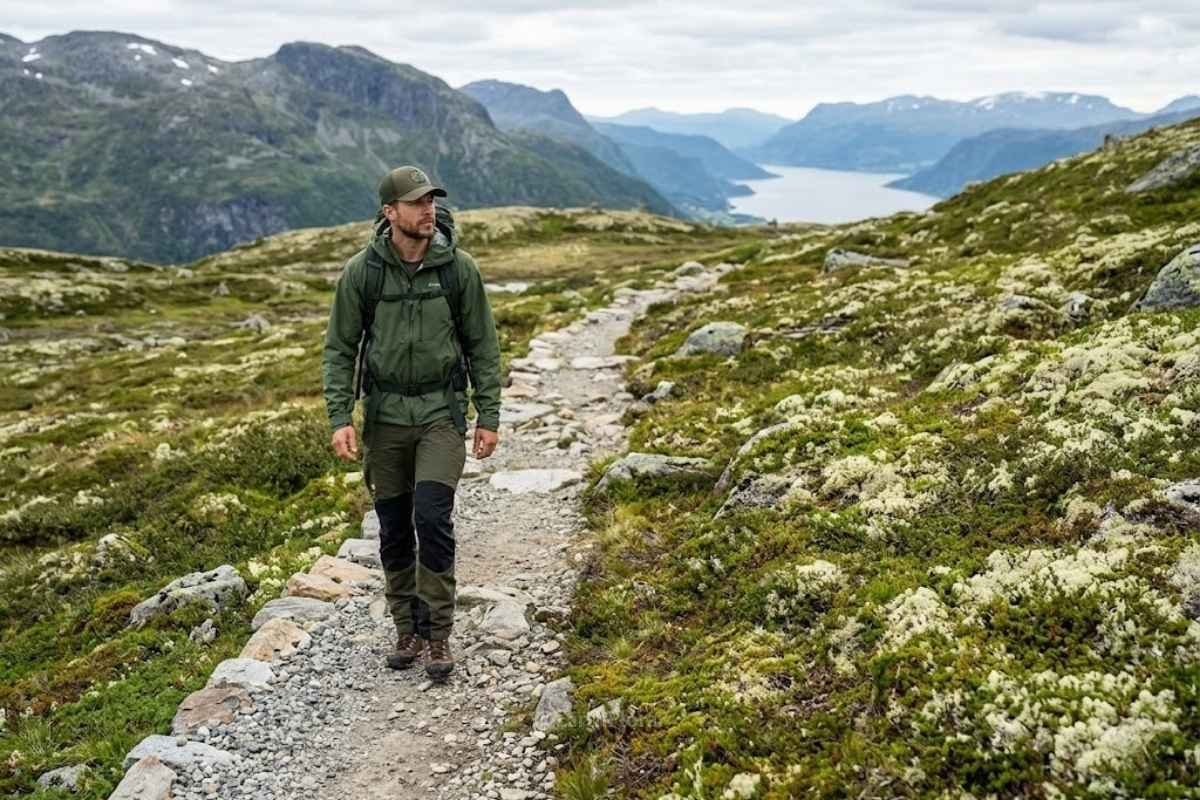
Norway’s natural sites are popular because they’re protected — and that protection depends on visitor behavior. Stick to marked trails, especially in Lofoten and Jotunheimen where erosion from off-trail hiking has become a real problem. In Svalbard, all travel outside Longyearbyen’s boundary requires a guide by law, partly for safety and partly for polar bear conservation. Choosing Eco-Lighthouse or Green Key–certified accommodation, common across Norway, is an easy way to support the country’s tourism sustainability goals.
- For more on packing and gear choices that hold up to this kind of trip, see our Sustainable Travel Guide and Best Eco-Friendly Outdoor Gear picks.
Frequently Asked Questions
What is the best time of year to visit Norway?
Late June through August is best for fjord cruises, hiking, and the midnight sun. For the northern lights, plan a trip between late September and late March, ideally based around Tromsø.
Is Norway expensive to visit?
Norway is consistently ranked among Europe’s most expensive countries for food and alcohol, though accommodation and outdoor activities can be more reasonable than people expect, especially with self-catering cabins and the cost-free right-to-roam camping rules.
How many days do you need in Norway?
A focused fjord-region trip (Bergen, Geiranger, Nærøyfjord) works well in 7–8 days. To add Lofoten or Tromsø comfortably, plan for 10–14 days.
Can you see the northern lights in southern Norway?
Occasionally, but reliability drops sharply south of the Arctic Circle. Tromsø, Lofoten, and Alta offer far better odds than Oslo or Bergen.
Do you need a car to see Norway’s best places?
Not necessarily. The rail-and-ferry “Norway in a Nutshell” route covers several highlights without driving, but a car (or campervan) gives far more flexibility for places like Lofoten and the Atlantic Road.
Do US, UK, and EU travelers need a visa for Norway?
Norway is in the Schengen Area, so most US, UK, Canadian, Australian, and EU travelers can enter visa-free for up to 90 days in any 180-day period. Always confirm current rules for your specific nationality before booking.
Final Thoughts: Building Your Norway Route
The best pThe best places to visit in Norway aren’t a checklist — they’re a route that has to match your season, your pace, and your budget. A few takeaways to carry into your planning:
- Pick a focus region (fjords, Arctic, or cities) rather than trying to do all three in one trip.
- Match your season to your goal — summer for fjords and hiking, winter for the northern lights.
- Build in slow time. Norway’s landscapes reward standing still more than they reward checking off stops.
- Travel lightly on the land — the wild places that make Norway extraordinary stay that way only if visitors keep it that way.
Planning the rest of your Scandinavian route? Check out our Best Places to Visit in Iceland guide for a similar landscape-led trip, or subscribe to our newsletter for new expedition guides as they publish.
Source: Visit Norway – official tourism board, Norwegian Environment Agency