






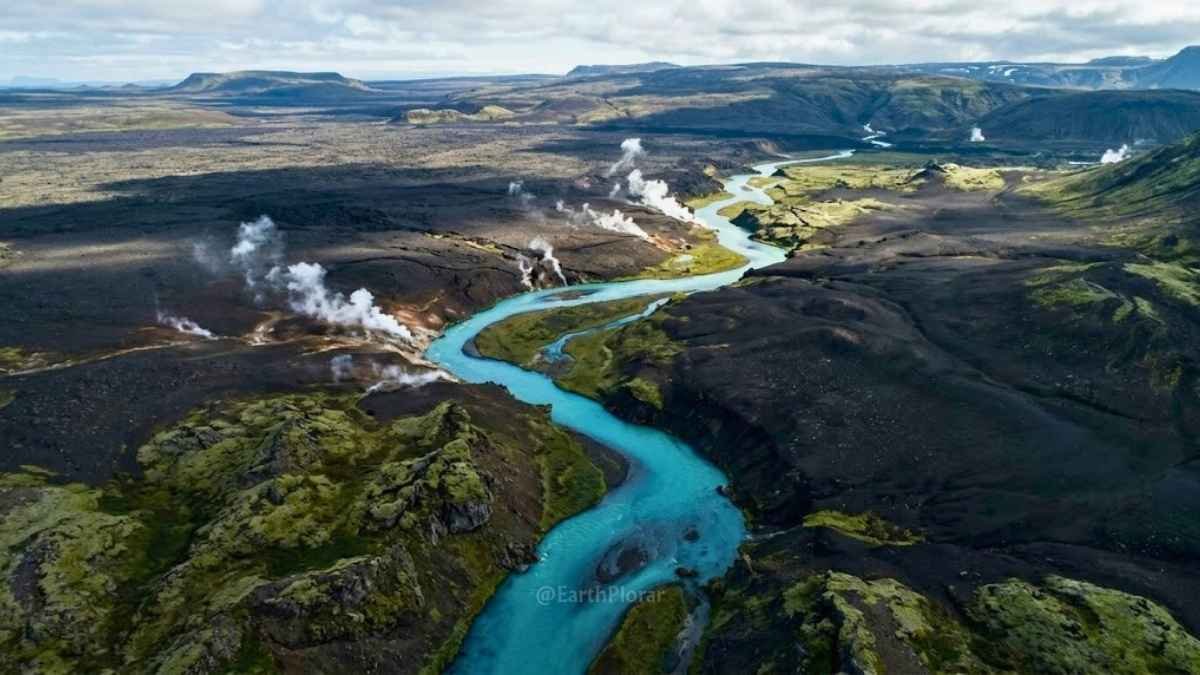
Imagine standing on a glacier that’s been building for ten thousand years, steam rising from a volcanic vent fifty metres away, and the sky overhead shimmering with green curtains of light. That is Iceland on an ordinary Tuesday in October. There is no other country on Earth where geology, weather, and wilderness collide with such raw, unapologetic intensity — and the best places to visit in Iceland will prove that beyond any doubt.
- Why Iceland Belongs on Every Explorer’s Map
- How to Choose Where to Go in Iceland
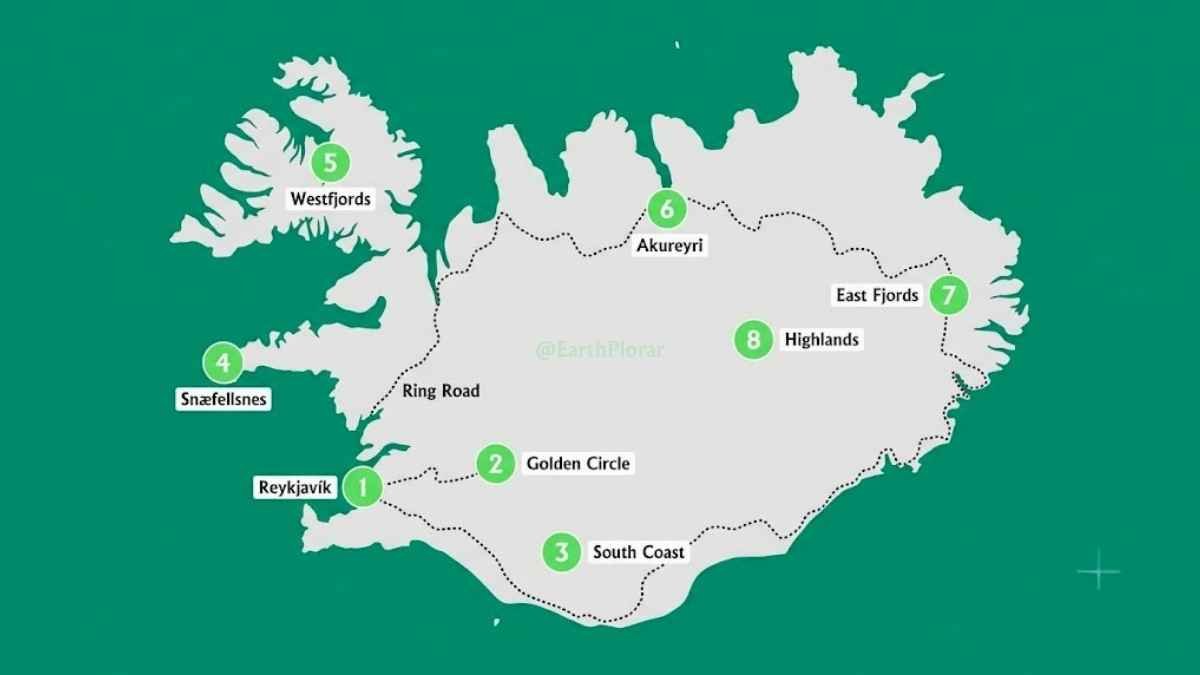
- Best Places to Visit in Iceland: The Complete Regional Breakdown
- Iceland Travel Essentials: Gear Recommendations
- Responsible Travel in Iceland
- FAQ: Best Places to Visit in Iceland 2026
- Key Takeaways: Planning Your Iceland Adventure
Whether you are chasing the Northern Lights above the Snæfellsnes Peninsula, swimming in geothermal rivers in the Westfjords, or watching a geyser erupt on a crisp autumn morning, Iceland delivers an experience that rewires the way you think about wild places. This guide cuts through the noise to give you the definitive map of Iceland’s greatest destinations — ranked, explained, and planned for every kind of adventurer.
Why Iceland Belongs on Every Explorer’s Map
Iceland is a land of extremes. It sits astride the Mid-Atlantic Ridge, meaning it is literally being pulled apart at a rate of two centimetres per year. That geological restlessness produces the geysers, hot springs, lava fields, and active volcanoes that make the country unlike any other on the planet. At the same time, the Gulf Stream keeps temperatures surprisingly moderate — Reykjavík rarely drops below -10°C even in winter.
According to the Icelandic Tourist Board, the country welcomed over 2 million international visitors in 2024 — almost six times its own population — and still most of its interior remains virtually untouched. That paradox is the secret of Iceland: it is simultaneously one of the world’s most visited destinations and one of its last genuine wildernesses.
How to Choose Where to Go in Iceland
Before diving into specific destinations, a few strategic decisions will shape your entire itinerary.
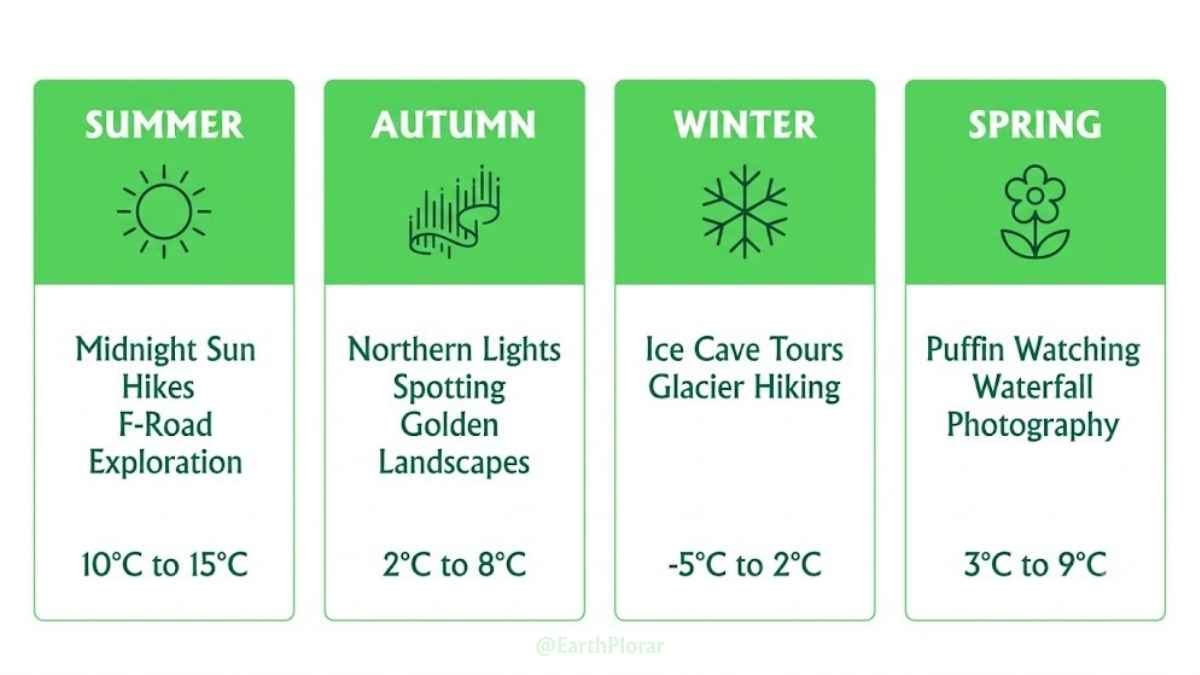
Season
| Season | Pros | Cons | Best For |
|---|---|---|---|
| Summer (Jun–Aug) | Midnight Sun, all roads accessible, puffin season | Crowds, higher prices, no Northern Lights | Hiking, Highland F-roads, wildlife |
| Autumn (Sep–Oct) | Northern Lights begin, fewer tourists, golden colours | Some highland roads closing | Northern Lights, photography, waterfalls |
| Winter (Nov–Feb) | Best Northern Lights, ice caves open, Christmas atmosphere | Short daylight (4–5 hrs), some roads closed | Ice caves, Aurora chasing, hot spring soaking |
| Spring (Mar–May) | Longer days returning, milder weather, fewer crowds | Unpredictable weather, some ice caves closing | Waterfalls (snowmelt peak), budget travel |
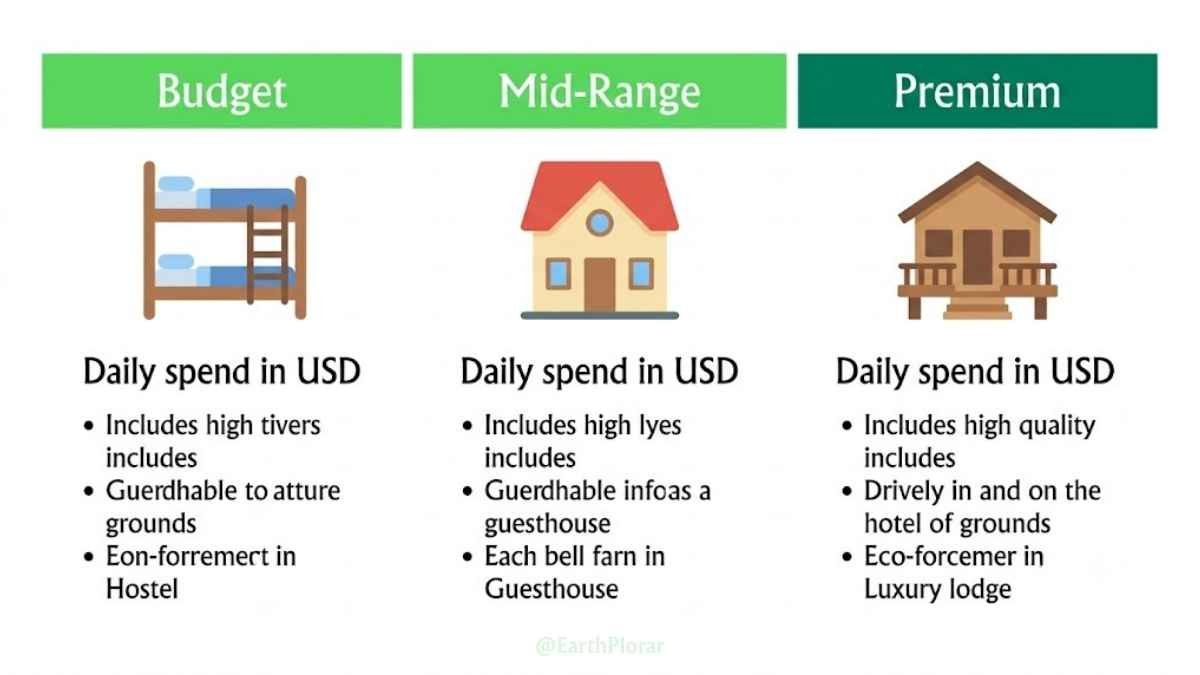
Budget Planning
| Budget Tier | Daily Spend (Approx.) | Accommodation Style |
|---|---|---|
| Budget | ISK 15,000–22,000 (~$110–$160 USD) | Hostels, camping, guesthouses |
| Mid-Range | ISK 30,000–50,000 (~$220–$370 USD) | Boutique guesthouses, farm stays |
| Premium | ISK 80,000+ (~$580+ USD) | Luxury lodges, private glacier tours |
Transport
A rental car is the single best investment you can make in Iceland. The Ring Road (Route 1) circles the entire island at 1,322 km and is fully paved. A standard 4×4 is sufficient for most itineraries; you need an F-road capable vehicle only if you plan to enter the Highland interior between June and September.
Best Places to Visit in Iceland: The Complete Regional Breakdown
1. Reykjavík — The World’s Northernmost Capital
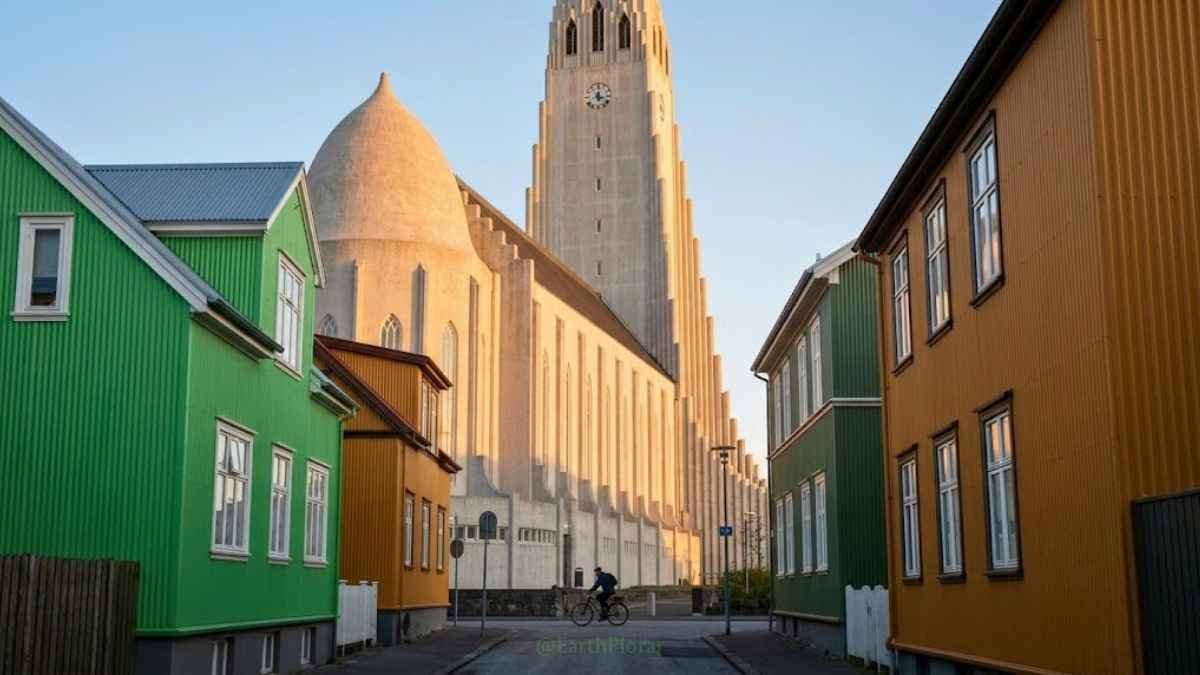
No Iceland trip begins without at least a day in Reykjavík. This is not merely a transit hub — it is a genuinely compelling city with world-class food, an emerging arts scene, and geothermal-heated pavements that stay snow-free all winter.
Must-do in Reykjavík:
- Climb the tower of Hallgrímskirkja church for a panoramic city view
- Walk the Old Harbour and board a whale-watching RIB in summer
- Eat at Matur og Drykkur for authentic Icelandic cuisine (fermented shark included, if you dare)
- Visit the Reykjavík Art Museum spread across three distinct buildings
- Soak at the brand-new Sky Lagoon — a geothermal spa perched on a sea cliff
Sustainability note: Reykjavík runs on 100% renewable energy — geothermal and hydroelectric. The city is a global model for carbon-neutral urban living.
Best time to visit: Year-round. Winter adds the possibility of Northern Lights from the city suburbs; summer adds endless daylight.
Nearest accommodation hub: City centre — walking distance to all major attractions.
2. The Golden Circle — Iceland’s Most Iconic Day Trip
The Golden Circle is a 300 km loop from Reykjavík that connects three of Iceland’s most dramatic natural landmarks. It is Iceland’s most visited route — and it earns that status completely.
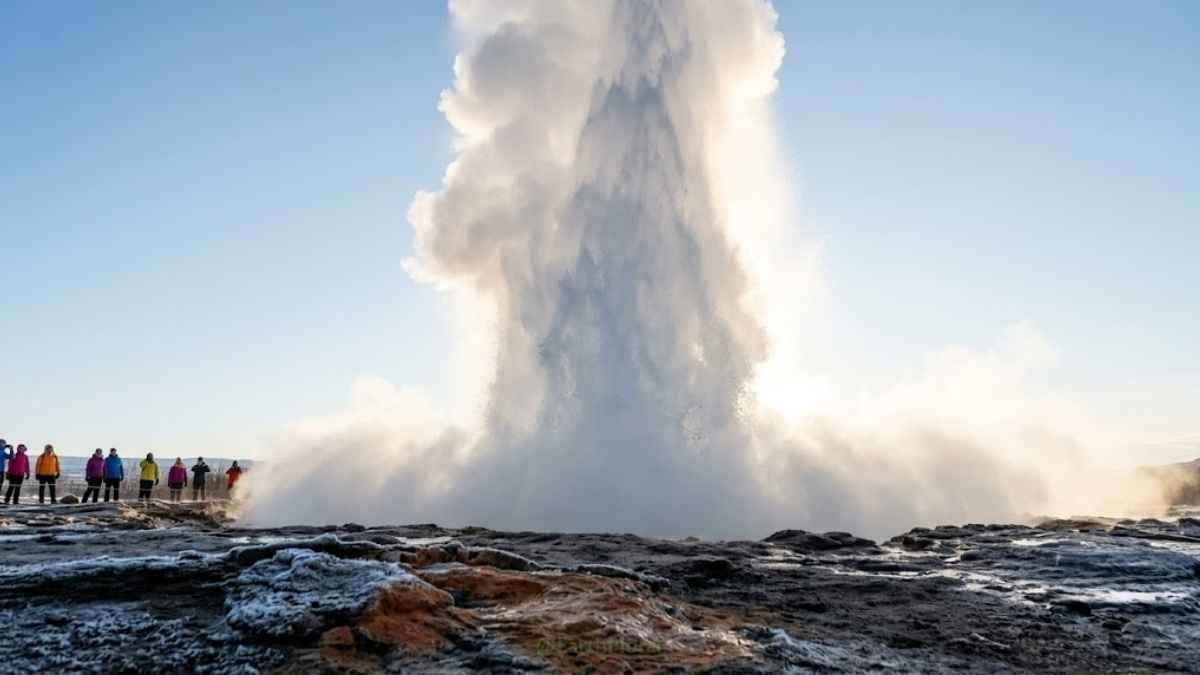
The three anchors:
Þingvellir National Park (UNESCO World Heritage Site) This is where the North American and Eurasian tectonic plates are visibly pulling apart. The rift valley is walk-able; you can literally stand in the gap between continents. Þingvellir is also the birthplace of the world’s oldest parliament, founded in 930 AD.
Geysir Hot Spring Area The original geyser — from which all geysers take their name — is technically dormant. Its neighbour, Strokkur, erupts every 4–10 minutes, launching a column of boiling water up to 40 metres into the air. The area smells sulphuric and the ground hisses constantly. It is magnificently alien.
Gullfoss Waterfall Two-tiered and thundering, Gullfoss drops 32 metres into a canyon that seems to swallow the river whole. In winter, ice sculptures form along its edges. In summer, rainbows hang in its mist permanently.
Pro tip: Leave Reykjavík by 7am to beat tour buses to Þingvellir and Geysir. The Golden Circle is perfectly manageable as a self-drive day trip.
3. The South Coast — Waterfalls, Black Sand, and Glaciers
The South Coast is Iceland’s most visually dramatic corridor — a 200 km stretch of Route 1 that delivers a waterfall, a glacier, a black sand beach, and an ice lagoon in rapid succession.
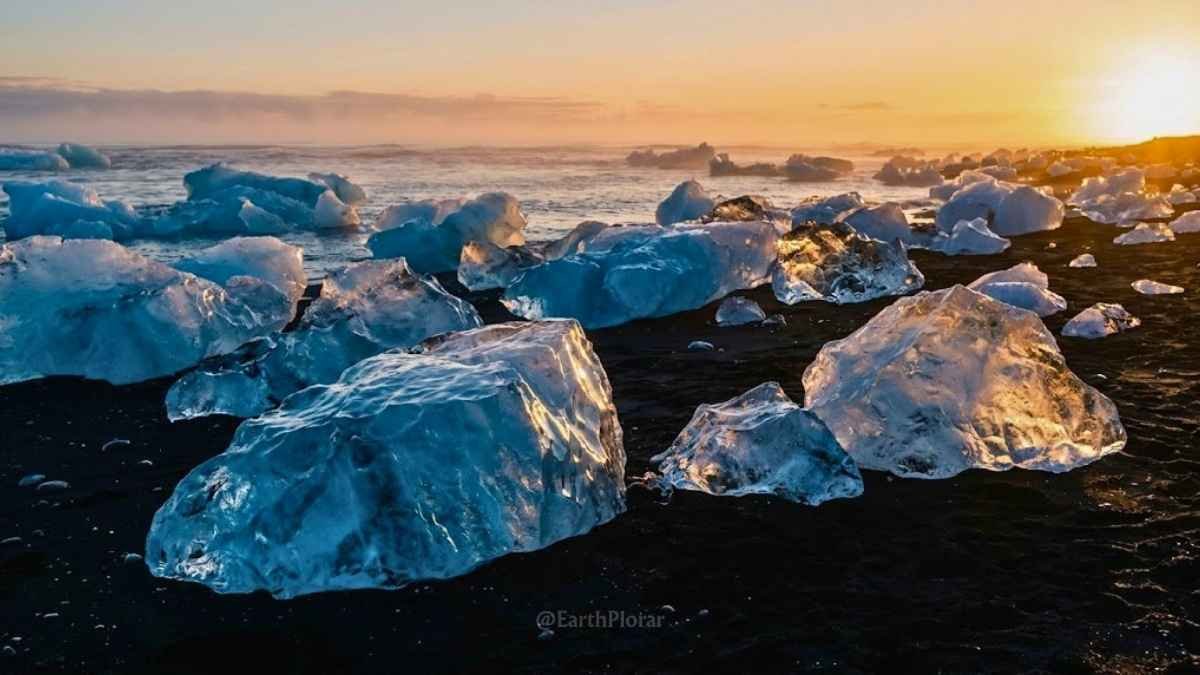
Key stops from west to east:
Seljalandsfoss Waterfall Walk behind the curtain of water — one of the most memorable 60 seconds in Icelandic travel. The path is accessible from April to October (icy and dangerous in winter). Nearby Gljúfrabúi is a hidden waterfall inside a slot canyon that 90% of visitors miss.
Skógafoss Waterfall Sixty metres wide and 60 metres tall, Skógafoss is pure power. Climb the 527 steps to the top for sweeping coastal views. According to local legend, a Norse settler hid a chest of gold behind it — it has never been found.
Dyrhólaey Arch and Black Sand Beaches The volcanic arch at Dyrhólaey frames Atlantic rollers perfectly. Below, Reynisfjara Black Sand Beach is one of Iceland’s most photographed spots — but treat it with serious respect. Sneaker waves here have killed visitors. Stay behind the safety line.
Skaftafell Nature Reserve Part of Vatnajökull National Park (Europe’s largest national park by area), Skaftafell offers easy glacier walks on Skeiðarárjökull and the beautiful Svartifoss waterfall, framed by hexagonal basalt columns.
Jökulsárlón Glacier Lagoon This is Iceland’s crown jewel. Icebergs calve from Breiðamerkurjökull glacier and drift through an electric-blue lagoon before washing up on the adjacent Diamond Beach — where translucent ice chunks glitter against black sand. Visit at sunrise for photographs that look genuinely impossible.
Responsible travel note: Jökulsárlón lagoon has expanded dramatically due to glacier retreat. The lagoon that appears on old maps has more than doubled in size since 1975. What you are seeing is simultaneously beautiful and a visible consequence of climate change.
4. The Snæfellsnes Peninsula — Iceland in Miniature
If you only have time for one regional detour from Reykjavík, make it Snæfellsnes. This 90 km peninsula crams nearly every Icelandic landscape type into a single drive — and at its tip sits Snæfellsjökull, the glacier-capped volcano that Jules Verne used as the entrance to the Earth’s centre in Journey to the Centre of the Earth.
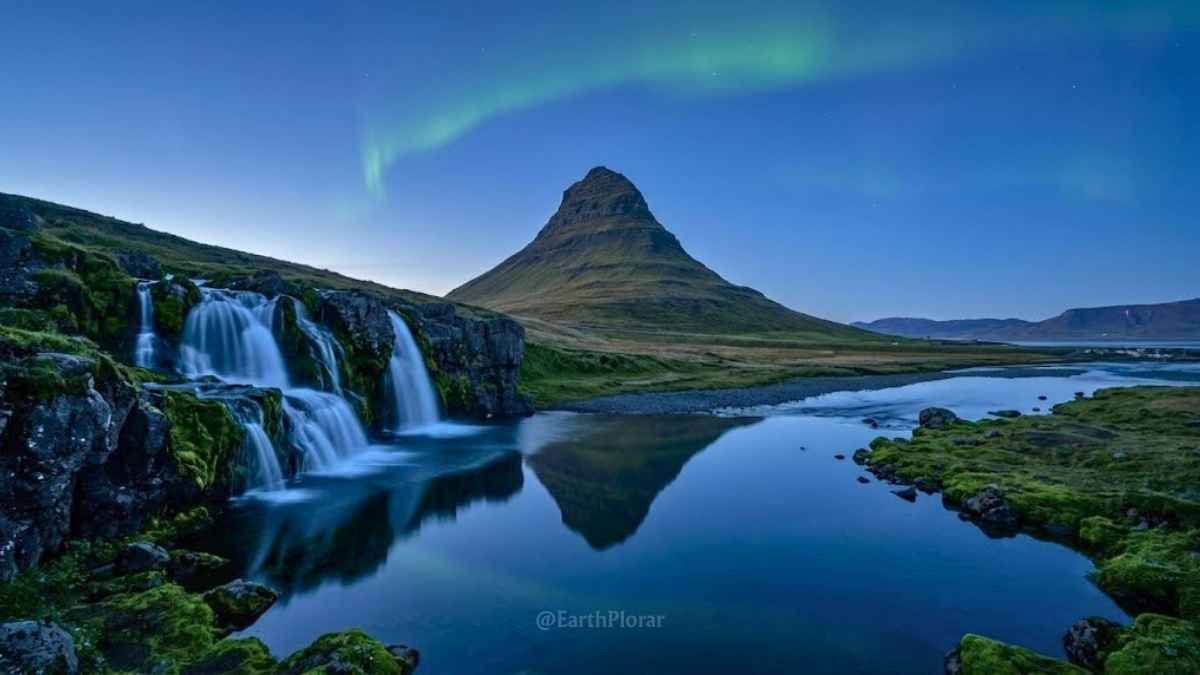
Highlights of Snæfellsnes:
- Kirkjufell Mountain — Iceland’s most photographed peak, shaped like a church steeple, reflected in Kirkjufellsfoss waterfall below
- Búðir Black Church — a striking 19th-century church isolated on a lava field beside the sea
- Arnarstapi Lava Arch — dramatic coastal cliffs and sea arches carved by Atlantic storms
- Snæfellsjökull National Park — glacier hiking, crater walks, and eerie lava tube caves
- Lóndrangar Basalt Pinnacles — twin volcanic plugs rising from the shoreline
Snæfellsnes is a 2–3 hour drive from Reykjavík and is best explored over two days with a base in Grundarfjörður or Stykkishólmur.
5. The Westfjords — Iceland’s Last Frontier
The Westfjords is the region that separates Iceland’s dedicated travellers from its tourists. This deeply fjord-cut peninsula in the northwest is home to just 7,000 people, Europe’s largest bird cliff, and some of the most remote landscapes on the planet.
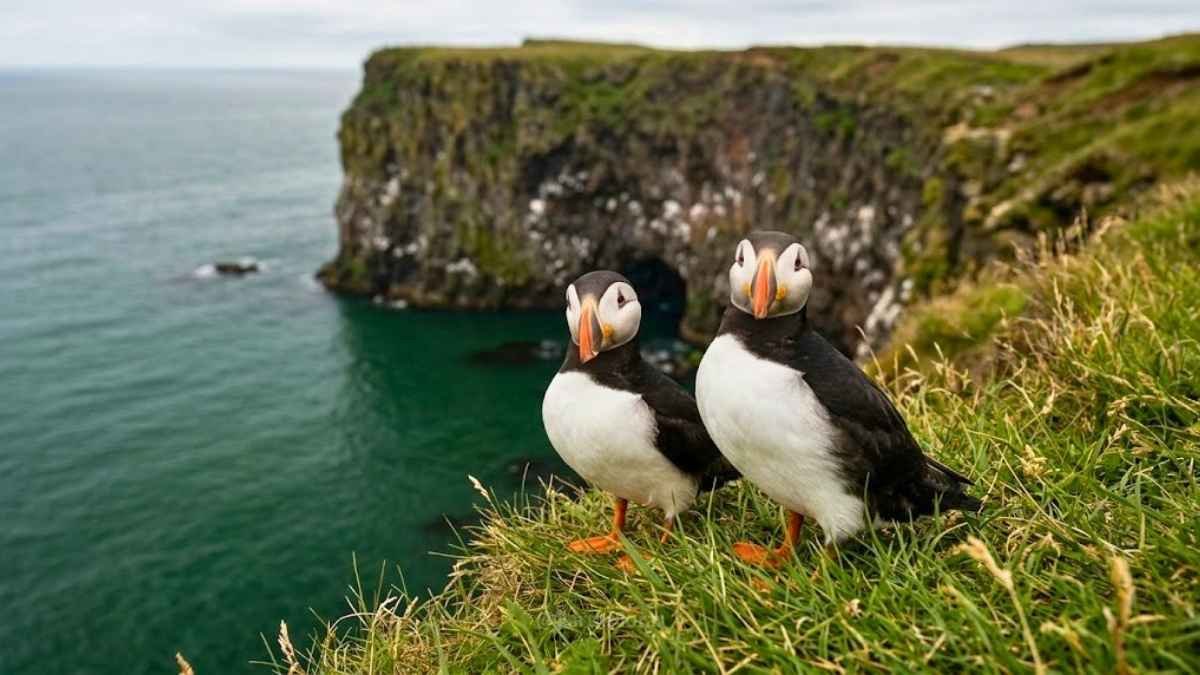
Why the Westfjords deserve their own trip:
Látrabjarg Bird Cliffs The westernmost point of Europe. The cliffs run for 14 km at heights up to 440 metres, hosting millions of puffins, razorbills, and fulmars. Puffins here are so unafraid of humans they will land within arm’s reach.
Dynjandi Waterfall (the “Jewel of the Westfjords”) A tiered cascade that fans out as it falls — wider at the base than at the top. There are no crowds here. You will often have it entirely to yourself.
Drangsnes Hot Pots Three small geothermal pools built into the harbour wall of the village of Drangsnes. Entry is free. The view is across the fjord to a wild tundra horizon. This is geothermal bathing as it was always meant to be.
Hornstrandir Nature Reserve Accessible only by boat, Hornstrandir is home to one of the world’s densest Arctic fox populations. There are no roads, no services, and no permanent human population. Multi-day trekking here is for experienced wilderness travellers only.
Getting there: Fly from Reykjavík to Ísafjörður (45 min) or drive the spectacular but time-consuming fjord roads (5–6 hours from Reykjavík). A dedicated 5–7 day Westfjords road trip is the definitive way to experience this region.
6. The North — Akureyri, Whale-Watching, and Waterfalls
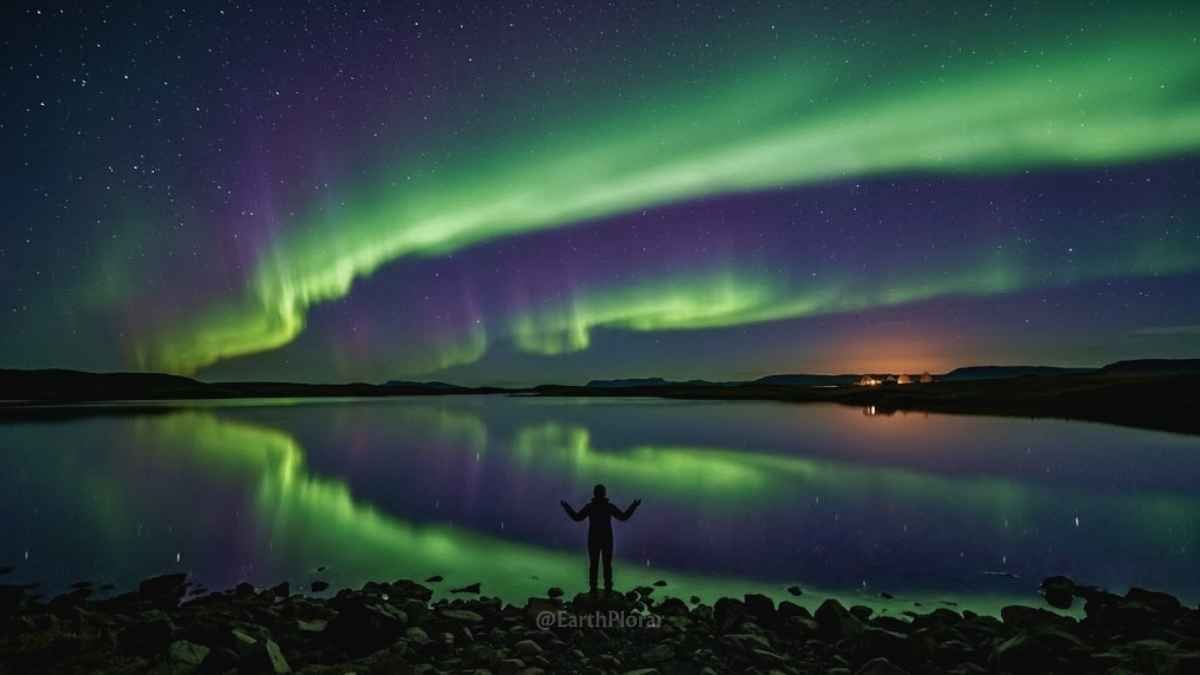
Akureyri is Iceland’s second city — a place so charming it has heart-shaped traffic lights and a botanical garden that grows plants at 65°N. The north is Iceland’s best-kept secret, offering comparable landscapes to the south with a fraction of the tourists.
North Iceland essentials:
Akureyri Town The cultural capital of the north. The Akureyri Church mirrors Hallgrímskirkja’s drama at smaller scale. The town’s restaurant scene has exploded in quality in recent years — book at Rub23 or Strikið for serious food.
Goðafoss Waterfall (“Waterfall of the Gods”) According to the Icelandic Sagas, the lawspeaker Þorgeir Ljósvetningagoði threw his Norse idols into this horseshoe falls in the year 1000 AD when Iceland officially converted to Christianity. The history adds layers to the beauty.
Húsavík — Iceland’s Whale-Watching Capital Located on Skjálfandi Bay, Húsavík offers the highest whale-sighting success rate in Europe (reportedly 98% on summer tours). Humpback whales, minke whales, and blue whales all frequent these waters. North Sailing operates sustainable, traditional wooden schooner tours.
Lake Mývatn Area A geologically hyperactive zone centred on a shallow, nutrient-rich lake. Within 30 minutes of each other: Námaskarð geothermal field (bubbling mud pools and sulphur vents), Dimmuborgir lava formations (like a Tolkien set), Grjótagjá cave hot spring (the Game of Thrones filming location), and Hverfjall crater (a near-perfect tuff ring you can hike around in an hour).
7. The East Fjords — Wilderness Without the Crowds
Iceland’s East Fjords (Austurland) is the quiet alternative to the South Coast. The N1 filling station towns are replaced here by tiny fishing villages accessible via winding fjord roads. If you are driving the full Ring Road, this is where you will have Iceland largely to yourself.
You May Also Like

Highlights:
- Seyðisfjörður — a fairy-tale town at the head of a fjord, with pastel-coloured wooden houses and Iceland’s only international ferry port
- Petra’s Stone Collection — an astonishing private collection of Icelandic minerals and rocks built over a lifetime by local woman Ljósbjörg Petra María Sveinsdóttir
- Hengifoss Waterfall — Iceland’s second-tallest waterfall, framed by striped red and black basalt strata
8. The Highlands — Iceland’s Wild Heart
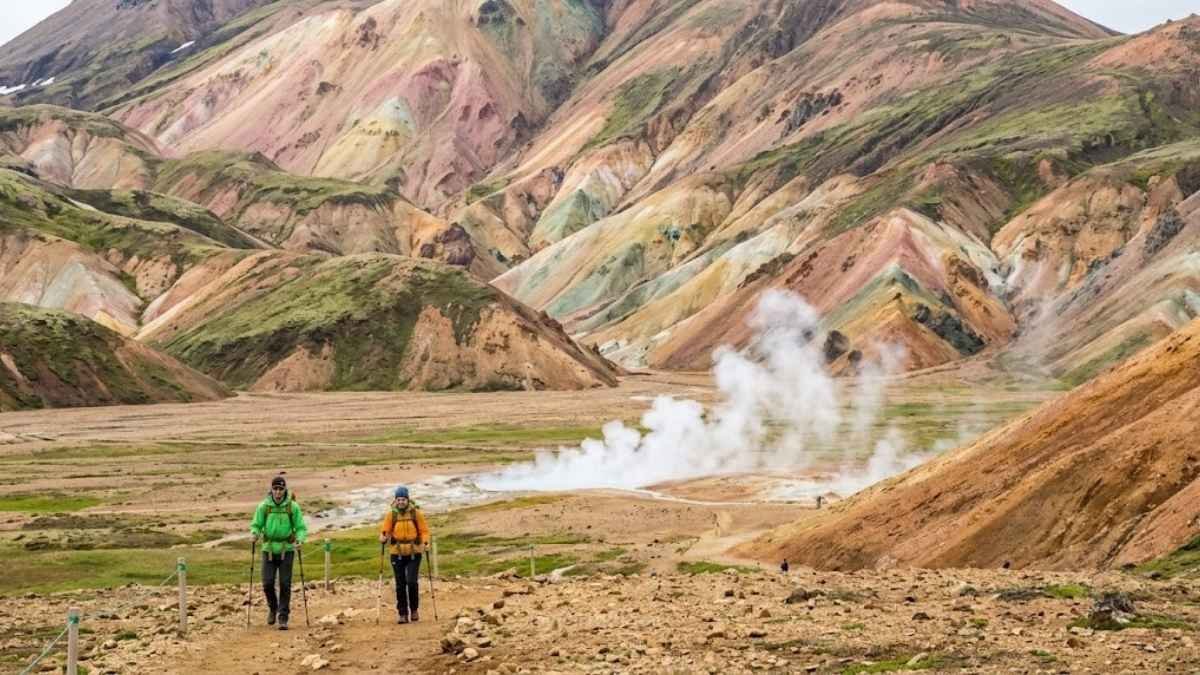
The Highlands are accessible only in summer (roughly late June to early September), only by F-road capable 4×4 vehicles, and only to travellers prepared for genuine wilderness. They are also the most spectacular landscape in Iceland.
The two essential highland routes:
Landmannalaugar A multi-coloured rhyolite mountain landscape unlike anything else on Earth. Pink, yellow, green, and brown peaks surround geothermal hot springs where you can soak after hiking. The famous Laugavegur Trail (55 km, 4–5 days) begins here and is consistently ranked among the world’s top long-distance hikes.
Þórsmörk Nature Reserve (“Valley of Thor”) Accessible only by super-jeep or the highland bus from Seljalandsfoss. Three glaciers converge above a lush birch valley. The hiking here — including the Fimmvörðuháls pass between Eyjafjallajökull and Mýrdalsjökull — is extraordinary.
Aldeyjarfoss Waterfall One of Iceland’s most surreal landscapes: a powerful waterfall framed symmetrically by hexagonal basalt columns. Reached via the F26 Sprengisandur route across the interior desert.
Iceland Travel Essentials: Gear Recommendations
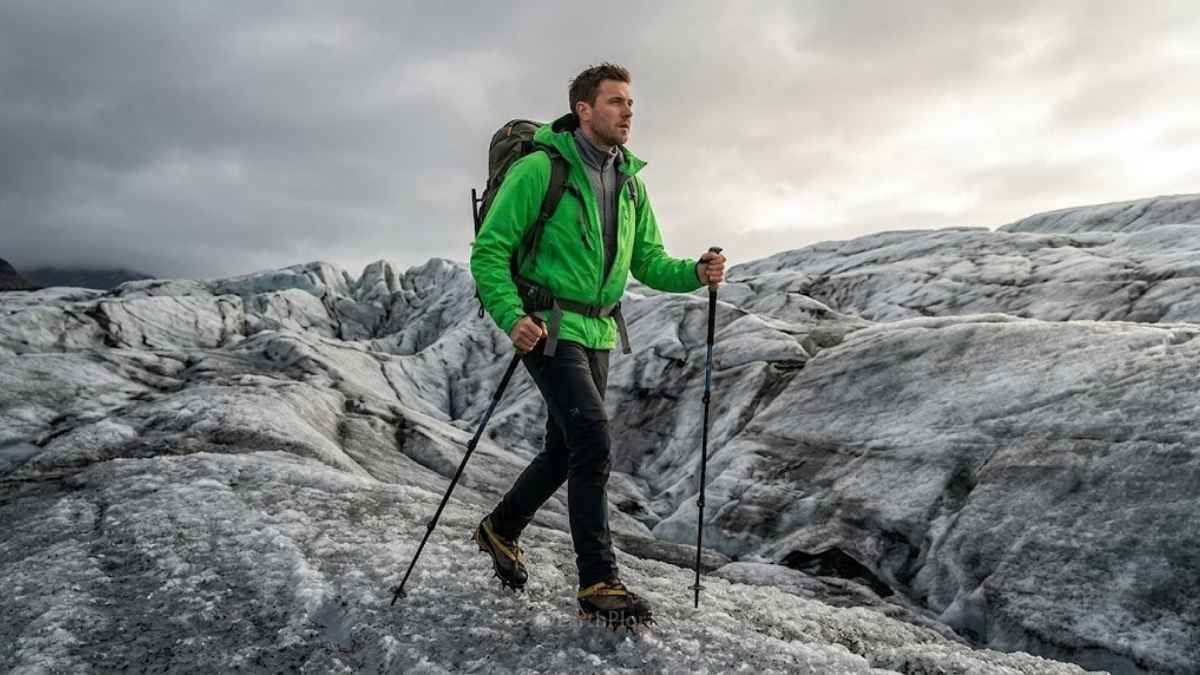
Iceland’s weather is famously unpredictable — locals say you can experience all four seasons in a single afternoon. The right gear transforms a miserable experience into a great one.
Layering System Comparison
| Gear Category | Budget Pick | Mid-Range Pick | Premium Pick | Approximate Price |
|---|---|---|---|---|
| Base Layer | Decathlon Forclaz 100 Merino | Smartwool Classic 250 | Icebreaker 260 Tech | $25 / $80 / $140 |
| Mid Layer | Patagonia Better Sweater (sale) | prAna Atom LT | MARMOT Cerium Down | $100 / $250 / $400 |
| Shell Jacket | Marmot Precip Eco | Helly Hansen Men’s Crew | Mountain Hardwear Threshold™ | $100 / $179 / $500 |
| Waterproof Trousers | Goerzon Men Waterproof | MARMOT Men’s PreCip | FROGG TOGGS FTX Armor | $26 / $99 / $139 |
| Hiking Boots | Merrell Moab 3 | Salomon X Ultra 5 Mid GTX® | SCARPA Men’s Rush TRK GTX | $130 / $185 / $239 |
| Beanie + Gloves | Buff Knitted Hat + Isotoner | Smartwool Hike + Outdoor Research | Black Diamond + Arc’teryx | $25 / $60 / $120 |
All products above are verified as available on Amazon (2025–2026). Price ranges reflect typical retail; Amazon pricing may vary seasonally.
For budget travellers: Prioritise a quality waterproof shell above everything else. You can layer almost anything underneath, but without a reliable outer layer, Iceland’s wind-driven rain will end your day early.
For premium setup: The Arc’teryx Beta SL shell is worth the investment for Iceland specifically — the combination of GORE-TEX Pro and a precisely cut hood designed for helmet compatibility (useful for glacier activities) justifies the price for serious travellers.
Responsible Travel in Iceland
Iceland’s tourism boom has created real environmental pressure. Here is how to travel responsibly:
The F-Road Rules
Never drive F-roads in a standard 2WD vehicle. Attempting to cross glacial rivers without a proper vehicle has stranded and endangered countless visitors. The Icelandic Sagas do not celebrate that kind of recklessness.
Stay on Marked Paths
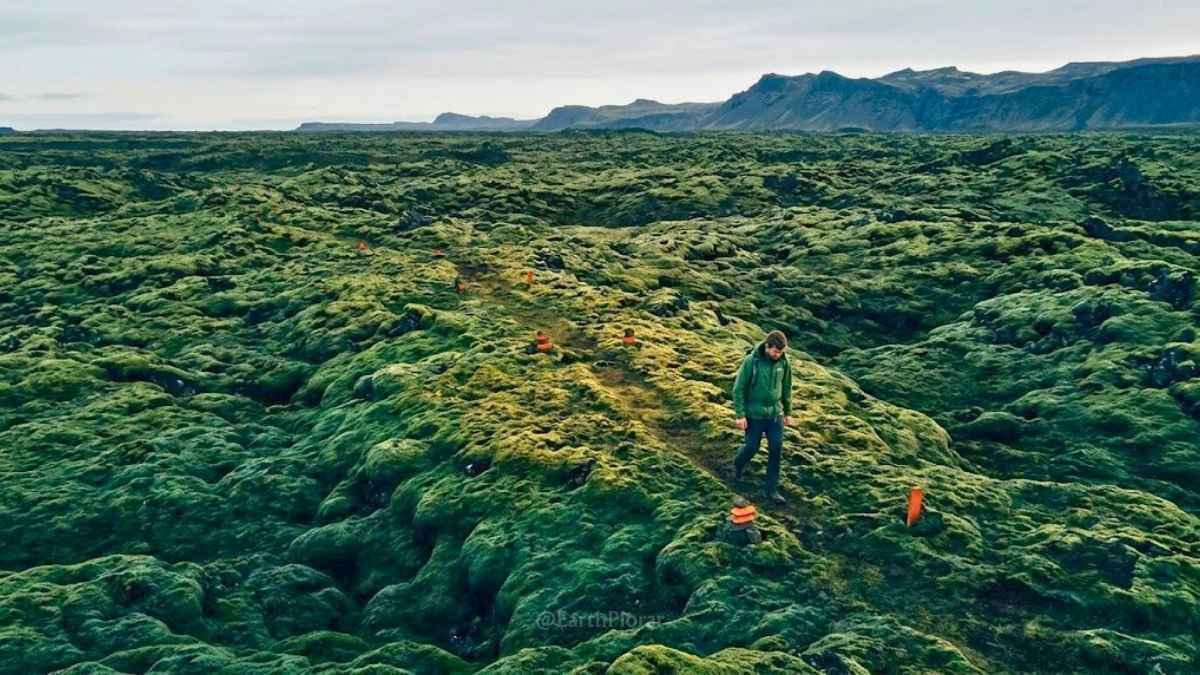
Iceland’s mossy lava fields (particularly in the Highlands) grow at approximately 1 mm per year. A footstep scar takes decades to heal. Orange cairns and rope barriers are not decorations — they mark the only acceptable paths.
Use Designated Camping
Wild camping in Iceland outside of official campsites is now heavily restricted following years of environmental damage. Iceland’s Camping Card offers excellent value and keeps you within sustainable infrastructure.
Support Local
Iceland’s small-scale guesthouses, family-run horse farms, and local restaurants are all under pressure from international hotel chains. Spending locally keeps money in Icelandic communities.
FAQ: Best Places to Visit in Iceland 2026
What are the absolute must-see places in Iceland for first-time visitors?
For a first-time visit, the non-negotiable list is: Reykjavík (at minimum one full day), the Golden Circle (Þingvellir, Geysir, Gullfoss), the South Coast (Seljalandsfoss, Skógafoss, Reynisfjara, and Jökulsárlón glacier lagoon), and the Snæfellsnes Peninsula. This covers Iceland’s greatest hits in approximately 7–8 days with a rental car.
When is the best time to visit Iceland?
There is no universally “best” time — it depends entirely on your priorities. June to August offers the Midnight Sun, all roads open, and puffin season but no Northern Lights. September to October gives you the best chance of Northern Lights alongside golden autumn landscapes and fewer tourists. December to February is peak Northern Lights season with open ice caves, but daylight is limited to 4–5 hours daily.
Do I need a 4×4 to drive in Iceland?
For the Ring Road and Golden Circle, a standard AWD or even 2WD vehicle is adequate in summer. You must have a 4×4 (ideally with high clearance) for any F-road in the Highland interior. Renting a smaller car and booking a super-jeep tour for Highland access is a cost-effective compromise.
Is Iceland safe to travel solo?
Iceland consistently ranks as one of the safest countries in the world for solo travel. Violent crime is extremely rare. The main safety risks are weather and terrain — blizzards, glacial river crossings, and cliff edges in high winds. Always check vedur.is (Icelandic Met Office) and road.is (road conditions) before driving anywhere remote.
How much does a trip to Iceland cost?
Iceland is genuinely expensive. Budget travellers spending on hostels, self-catering, and avoiding tourist activities can manage on roughly $110–160 per day. Mid-range travel with guesthouses, restaurant dinners, and guided tours typically runs $220–370 per day. Premium lodge stays, private glacier tours, and helicopter excursions push daily costs to $580 and beyond. Booking flights and accommodation 3–6 months in advance significantly reduces costs.
Can I see the Northern Lights in Iceland?
Yes — Iceland is one of the best places on Earth to see the Aurora Borealis. The lights are visible from late August to mid-April when nights are dark enough. The best conditions are clear skies, low light pollution, and high solar activity. Check the Icelandic Met Office’s Aurora Forecast daily. The further from Reykjavík you are, the darker the skies — the Westfjords, North Iceland, and the East Fjords offer the best viewing.
What should I know about visiting Jökulsárlón?
Jökulsárlón is Iceland’s most visited natural attraction after the Golden Circle. Visit at sunrise or sunset for the best light on the icebergs. The adjacent Diamond Beach is a 5-minute walk. Amphibious boat tours run from May to October. The lagoon is actively changing due to glacial retreat — the boat route available today will be different in five years. Come soon.
Key Takeaways: Planning Your Iceland Adventure
Iceland rewards preparation and punishes complacency. Here are the five things to carry into your planning:
- Drive yourself. A rental car — specifically a 4×4 if you plan any highland access — is the single best investment of your entire trip budget. No tour bus will take you to Dynjandi or Hornstrandir.
- Go beyond the Golden Circle. The Golden Circle is magnificent, but the Westfjords, North Iceland, and the Highlands are where Iceland reveals its real character. Build your itinerary outward from the tourist trail.
- Pack for all four seasons in one day. A waterproof shell, merino base layer, and insulating mid-layer will handle everything Iceland throws at you.
- Travel responsibly. Stay on marked paths, use designated campsites, support local businesses, and never attempt F-roads in underpowered vehicles. Iceland’s landscapes are extraordinary precisely because they have not been destroyed.
- Come back. Iceland is a country that multiplies in meaning with each visit. Every season reveals something new. Most travellers who visit once are back within three years.
Ready to Explore?
Iceland is not a destination you tick off a bucket list. It is a place that gets inside your head and stays there. Whether you are planning your first visit or your fifth, EarthPlorar is here to help you travel further, smarter, and more sustainably.
📬 Subscribe to the EarthPlorar Newsletter for weekly destination guides, sustainable gear recommendations, and exclusive trip-planning resources — delivered to your inbox every Thursday.