







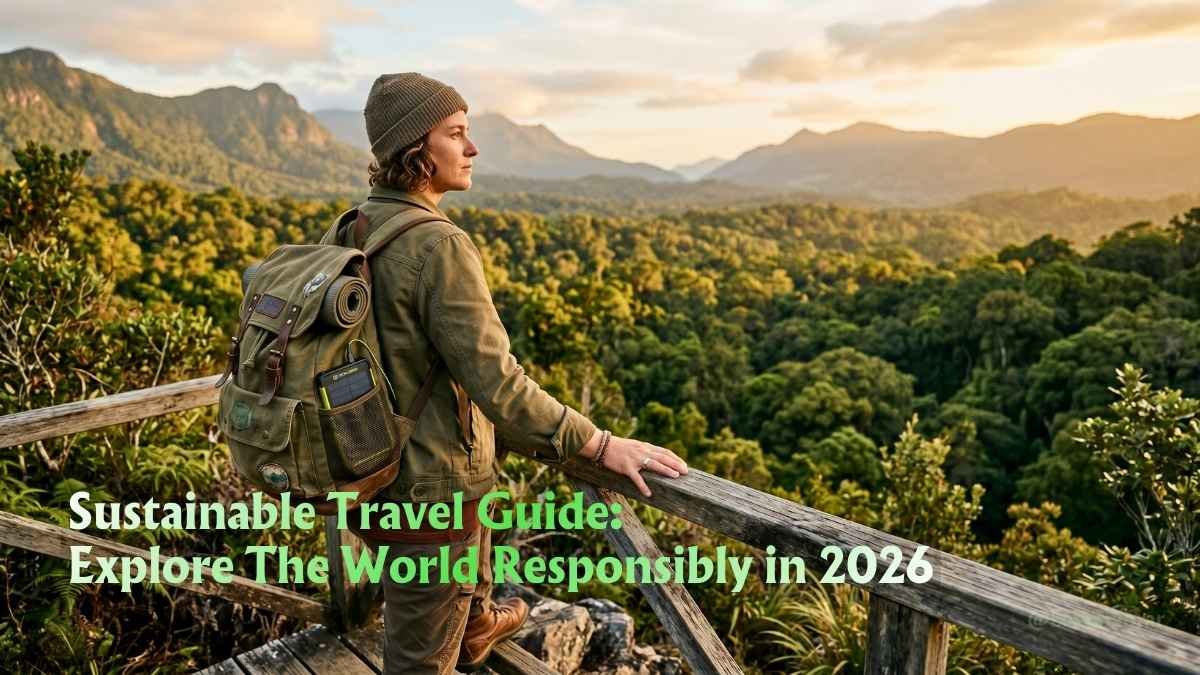
“In every walk with nature, one receives far more than he seeks.” — John Muir
Right now, somewhere on this planet, a glacier is retreating. A coral reef is bleaching. A rainforest is being cleared.
- What This Sustainable Travel Guide 2026 Will Teach You
- The State of Travel in 2026 — Why This Moment Is Critical
- The CLEAR Method — A Sustainable Travel Guide 2026 System That Actually Works
- Green Travel Destinations Worth Your 2026 Itinerary
- Eco-Friendly Travel Tips by Journey Type
- Ethical Practices for the Digital Traveller
- FAQ: Sustainable Travel Guide 2026
- The Bottom Line: Responsible Travel Is the Only Travel Worth Taking
And right now, somewhere else, a solar-powered safari lodge is employing 40 local families. A marine reserve is recovering. A mountain gorilla population is growing — because travellers chose to care.
This sustainable travel guide 2026 exists at the intersection of those two realities. It is a practical, honest, deeply researched resource for every traveller who refuses to be part of the problem — and wants the tools to become part of the solution.
You love this world. Let’s make sure the way you see it doesn’t cost the world everything.
What This Sustainable Travel Guide 2026 Will Teach You
Before we dive in, here’s exactly what you’ll walk away with:
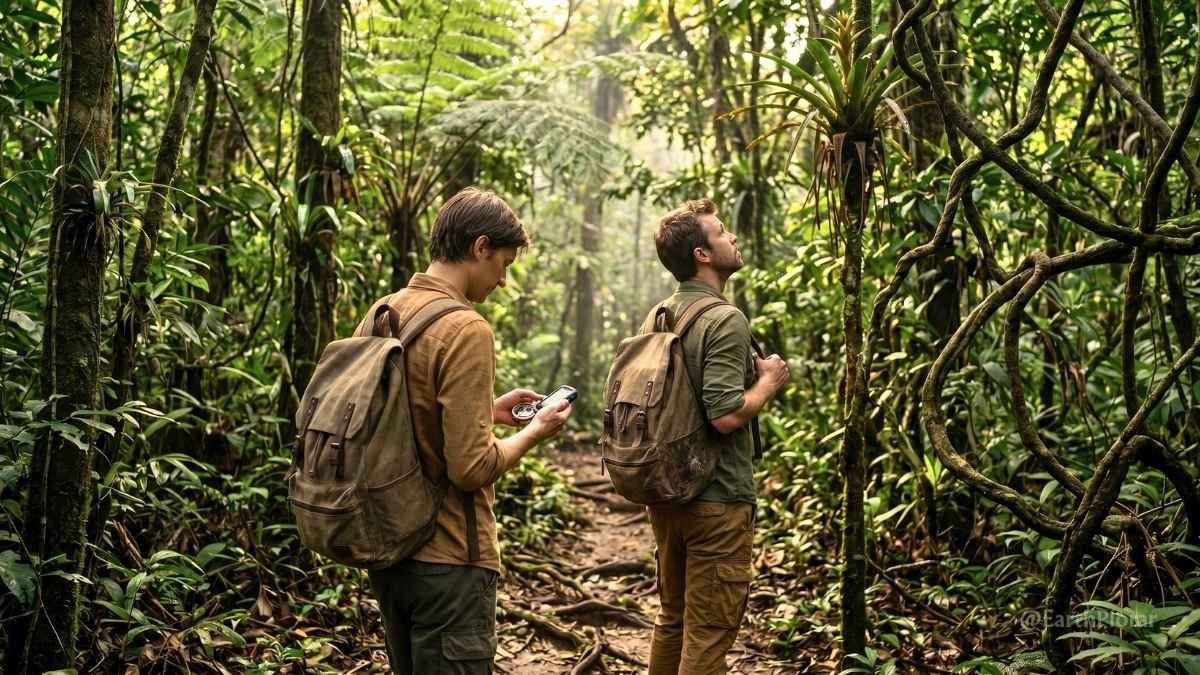
This is not a list of vague platitudes. Everything here is specific, source-backed, and field-tested.
The State of Travel in 2026 — Why This Moment Is Critical
The Tourism Paradox
Here is the central tension every conscious traveller must hold: tourism simultaneously destroys and saves the natural world.
Tourism generates over $1.9 trillion in global revenue and supports 1 in 10 jobs worldwide, according to the World Travel & Tourism Council (WTTC). In many developing nations, it is the primary economic engine — the reason governments protect forests, coastlines, and wildlife habitats.
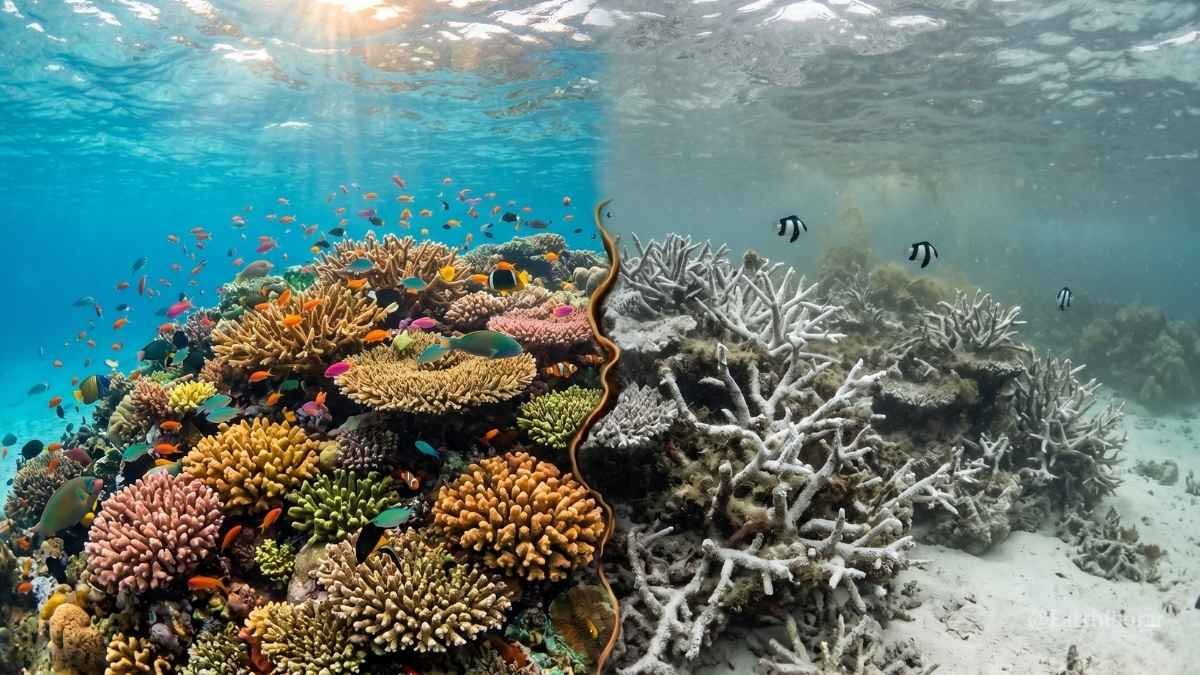
But the same industry also drives:
The industry is not going away. Nor should it. But in 2026, every stakeholder — from government to operator to individual traveller — is being forced to reckon with the cost of doing nothing. This sustainable travel guide puts you on the right side of that reckoning.
The Rise of the Intentional Traveller
Something significant shifted in travel culture between 2023 and 2026. A Booking.com Sustainable Travel Report found that 76% of global travellers want to travel more sustainably — but over half don’t know how to take practical action.
That gap between intention and behaviour is exactly what this guide closes.
The CLEAR Method — A Sustainable Travel Guide 2026 System That Actually Works
Forget vague advice. The CLEAR Method is EarthPlorar’s original framework for applying responsible tourism at every stage of your journey — from planning a trip to returning home.

C — Calculate Your Impact Before You Go
Knowledge precedes action. Before you book anything, calculate the estimated carbon footprint of your trip.
Use these tools:
| Tool | What It Measures | Link |
|---|---|---|
| ICAO Carbon Calculator | Flight emissions (official UN tool) | icao.int |
| Atmosfair | Full flight + hotel + ground transport | atmosfair.de |
| My Climate | End-to-end trip footprint | myclimate.org |
| Carbon Footprint Ltd | Holiday calculator with accommodation types | carbonfootprint.com |
Once you have a number, you can make informed decisions: choose a lower-emission routing, swap a flight for rail, or determine a meaningful offset amount.
Pro tip: The biggest single variable in any trip’s carbon footprint is almost always the flight. A return long-haul flight from London to Bangkok generates roughly 2.1 tonnes of CO₂ equivalent per economy passenger — nearly equivalent to an average European’s entire annual home energy use.
L — Localise Your Spending
Economic leakage — where tourist dollars flow out of destination communities into foreign-owned corporations — can reach 85% in some package tourism markets, according to UNEP research. This is where your individual choices carry enormous leverage.

High-impact localisation strategies:
EarthPlorar’s Verified Local Operators Directory → lists community-certified experiences across 60+ destinations, updated quarterly.
E — Engage With Nature on Its Terms
Nature tourism — wildlife watching, diving, trekking, forest bathing — is the category most prone to doing unintentional harm in the name of appreciation. Ethical practices in this space are non-negotiable.
Core principles for nature engagement:
For wildlife tourism specifically, read EarthPlorar’s companion guide: Ethical Wildlife Tourism: Choose Operators That Support Conservation →
A — Advocate Through Your Choices
Individual choices aggregate into market signals. When you choose a certified eco-lodge over an uncertified chain, you vote with your wallet for the kind of tourism industry that exists in 10 years.
But advocacy goes further than spending choices.
Active advocacy as a traveller:
R — Reduce Waste Systemically
The waste problem in tourism is systemic and personal simultaneously. You cannot fix resort infrastructure alone — but you can refuse to contribute to the problem, and your refusal has more collective force than it appears.

Your 2026 zero-waste travel system:
At your destination:
See EarthPlorar’s full Sustainable Packing Guide 2026 → for climate-specific gear recommendations.
Green Travel Destinations Worth Your 2026 Itinerary
Every Sustainable Travel Guide needs destinations, and every destination below has been evaluated against three criteria: verified conservation funding, community economic benefit, and controlled tourist impact. These are not destinations merely labelled “eco” — they are places where responsible tourism is embedded in policy, infrastructure, and culture.
🌿 Costa Rica — The Blueprint for Eco-Friendly Travel
Costa Rica invented modern ecotourism. Today, it protects 30% of its national territory, generates 99%+ of its electricity from renewables, and channels tourism revenue directly into its national park system through the SINAC (National System of Conservation Areas).
Key responsible tourism highlights:
EarthPlorar Tip:
Skip the over-visited Arenal zone and head to the Osa Peninsula or Tortuguero for a lower-impact, higher-quality experience. EarthPlorar’s Costa Rica Sustainable Guide →
🏔️ Bhutan — The World’s Only Carbon-Negative Nation
Bhutan’s constitution mandates that at least 60% of national territory remain forested in perpetuity. In 2026, it sits at 71%. Its Sustainable Development Fee (USD $100/day) funds universal healthcare, free education, and conservation simultaneously.
Tourism here is not mass tourism. It is intentional, high-value, and profoundly regulated — and the result is a country of extraordinary cultural integrity and ecological health.
Don’t miss: Paro Taktsang (Tiger’s Nest), the Punakha Valley, and the Snowman Trek for serious high-altitude adventurers.
🌊 Palau — The Pacific’s Marine Conservation Leader
Palau introduced the world’s first national Responsible Tourism Policy in 2018 — requiring every visitor to sign an environmental pledge on arrival. It has since banned reef-toxic sunscreen by national law, established the Palau National Marine Sanctuary covering 80% of its Exclusive Economic Zone, and created the world’s first shark sanctuary in 2009.
The result: some of the healthiest reef ecosystems in the Pacific, directly accessible to visitors via licensed local operators.
🦁 Kenya & Tanzania — Conservation Tourism at Continental Scale
East Africa’s safari economy is one of the most compelling arguments for responsible tourism on Earth. In Kenya’s community conservancies — Ol Pejeta, Lewa, Samburu — tourism revenue directly funds anti-poaching patrols, wildlife corridors, and community schools.
The African Wildlife Foundation documents consistent findings: wildlife populations are measurably higher in tourism-funded community conservancies than in adjacent unprotected land. Your safari permit is conservation finance.
EarthPlorar’s East Africa Wildlife Guide → Read More →
🚂 Europe by Rail — Low Carbon Travel at Its Best
For European travellers in 2026, the single highest-impact sustainable travel choice is replacing short-haul flights with rail. The numbers make the case starkly:
| Route | Flight CO₂ (kg) | Train CO₂ (kg) | Saving |
|---|---|---|---|
| London → Paris | 56 kg | 2 kg | 96% |
| Amsterdam → Berlin | 48 kg | 5 kg | 89% |
| Paris → Barcelona | 72 kg | 6 kg | 91% |
| London → Edinburgh | 50 kg | 5 kg | 90% |
Source: Eurostar Environmental Report & Seat61.com
Europe’s rail network has expanded significantly in 2025–2026, with new overnight routes connecting more cities than ever before. The Man in Seat 61 remains the definitive independent guide to rail travel worldwide.
EarthPlorar’s Europe by Rail Guide 2026 → Explore Routes →
Eco-Friendly Travel Tips by Journey Type
City Breaks
Beach and Island Travel
Trekking and Wilderness Travel
Cultural Heritage Travel
Ethical Practices for the Digital Traveller
In 2026, social media is inseparable from travel culture. But irresponsible content creation causes real harm — from revealing protected species locations to glamourising dangerous proximity to wildlife.
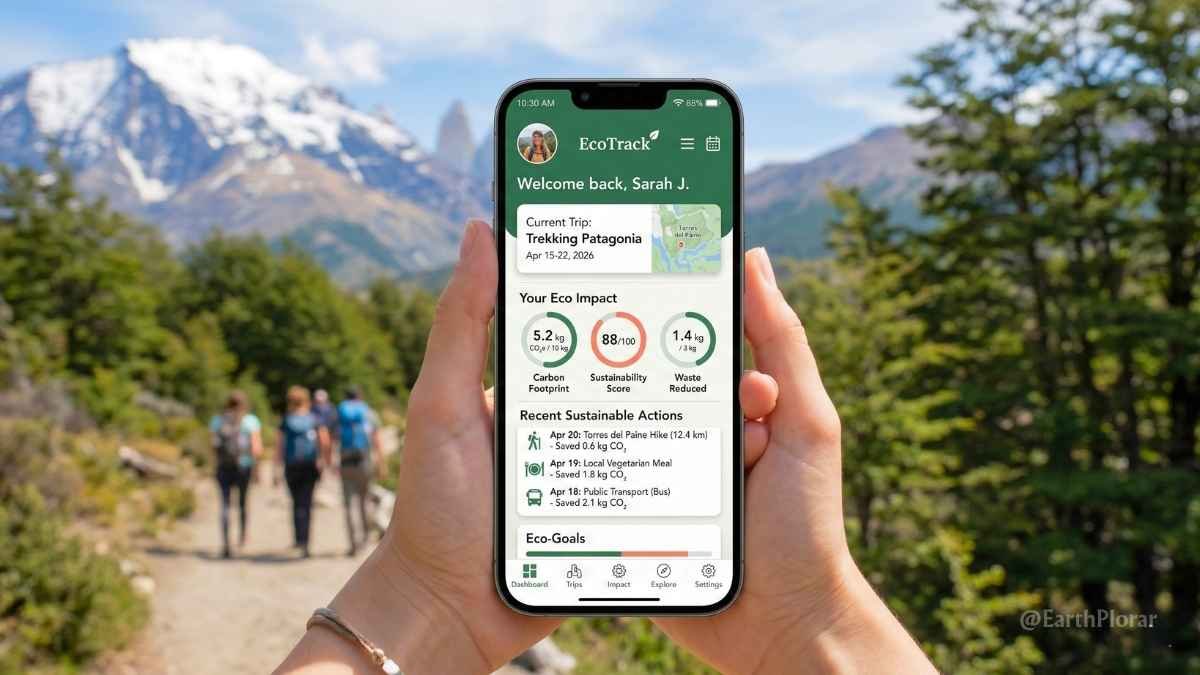
Responsible content creation principles:
FAQ: Sustainable Travel Guide 2026
What is sustainable travel and how is it different from regular tourism?
Sustainable travel is tourism that consciously minimises its negative environmental, cultural, and economic impacts while actively contributing to the wellbeing of destinations and their communities. Unlike conventional tourism — which often prioritises cost, convenience, and entertainment above all — sustainable travel integrates responsibility into every decision: where you stay, how you get there, who you hire, what you eat, and how you behave on the ground. In 2026, the distinction matters because the cumulative impact of 1.8 billion annual tourist arrivals makes individual choices statistically significant.
How do I start travelling more sustainably if I’m a complete beginner?
Start with three changes on your next trip: first, choose locally owned accommodation over an international chain. Second, hire a local guide for at least one experience. Third, carry a reusable water bottle and refuse single-use plastic throughout the trip. These three actions alone — applied consistently — produce measurable positive economic and environmental outcomes. Build from there using the CLEAR Method outlined in this guide.
What are the best eco-friendly travel destinations in 2026 for first-time sustainable travellers?
For accessibility and strong sustainable infrastructure, Costa Rica is the world’s best entry point — well-signed trails, CST-certified operators, English widely spoken, and extraordinary biodiversity. In Europe, Slovenia offers world-class sustainable tourism with minimal barrier to entry. For a transformative experience with higher investment, Rwanda’s mountain gorilla trekking and Bhutan’s high-value model are without peer. EarthPlorar’s Verified Green Destinations List → updates quarterly with new recommendations.
Is sustainable travel more expensive than conventional travel?
Not necessarily — and the framing is incomplete. Some elements of sustainable travel cost more: verified eco-lodges may charge a premium; ethical wildlife permits are priced to fund conservation; local guides charge fairly for genuine expertise. But sustainable travel also directs spending away from overpriced international chains and toward local guesthouses, street food, and community experiences that are often significantly cheaper. The overall trip cost difference, for most travellers, is negligible. The difference in impact is enormous.
How do I identify greenwashing in travel marketing?
Greenwashing signs include: vague, uncertified claims (“eco-friendly,” “green,” “sustainable” without supporting evidence); no published impact reports or conservation partners; inability to answer specific questions about waste management, energy sources, or community benefit; and the use of nature imagery without any substantive environmental policies. Verify claims by checking third-party certifications (GSTC, Rainforest Alliance, Travelife, Green Key, Green Fins) directly on the certifier’s website. Logos can be copied — verified listings cannot.
What is the single highest-impact change I can make as a traveller?
Fly less. The carbon footprint of aviation so dramatically outweighs all other travel choices that reducing flights — or replacing them with rail where viable — is by far the highest-impact individual action available. Where flying is unavoidable, fly economy class on direct routes and offset through Gold Standard or Verified Carbon Standard programs. Every other sustainable travel action is meaningful — but none move the needle as decisively as this one.
The Bottom Line: Responsible Travel Is the Only Travel Worth Taking
In 2026, the world does not need fewer travellers. It needs better ones.
Every destination in this guide is extraordinary precisely because someone — many someones — chose to protect it rather than exploit it. Your role in this story is not passive. The choices you make every time you travel either compound the damage or counter it.
The CLEAR Method gives you a system. This guide gives you the knowledge. The destinations give you the reasons. Now the journey is yours.
Your core takeaways from this sustainable travel guide 2026:
📬 Join the EarthPlorar Community of Intentional Adventurers
Every month, we send EarthPlorar subscribers one deeply researched guide, one verified operator spotlight, and one conservation win worth celebrating — because sustainable travel guide news isn’t always bad news.
Subscribe free. Explore better.